

Egyptians’ transportation preferences have changed little over the decades. They still favor personal cars, taxis, or ride-hailing over public transportation, regardless of how crowded, close, or far their destinations are.
In 2025, about 77% of automotive sales were passenger cars. Of those, 95% were petrol-powered (ICE), according to a TechSci Research report. The report forecasts Egypt’s automotive market size will grow from $6.78 billion in 2025 to $10.34 billion by 2031, an average annual growth rate of 7.28%.
Despite accounting for only 5% of passenger auto sales, “Egypt’s electric vehicle (EV) market is no longer a small experimental segment limited to luxury buyers and imported models,” Egypt Business Directory (EBD), a business services company, said in a May post.
Local interest in these zero-emission cars isn’t primarily about protecting the environment. “In Egypt, conversation [about] EVs is increasingly economic [rather than] through the lens of sustainability and emission reductions,” EBD noted.
To ensure buying climate-friendly vehicles is feasible nationwide, significant investment is needed to build a comprehensive local EV ecosystem beyond adding charging stations and supplying more units from more brands.
Running ICE vs. EV
A major reason car buyers are considering EVs is the rising running cost of ICE vehicles. The government increased petrol prices 800% to 1,200% between 2014 (before the pound’s multiple devaluations) and the end of October. At the pumps, octane 95 prices rose from EGP 6.25 per liter to EGP 24 during that period.
Spare part prices, particularly imported ones, have risen sharply, driven by the dollar increasing from EGP 7.15 in 2014 to EGP 54.5 at press time. Companies offering maintenance services are also charging more, as electricity rose between 200% and 673%, along with other utilities, while the minimum wage jumped more than 566% in the past 12 years.
EV owners don’t incur most of those costs. They replace electric motors and batteries only at the end of their lifetimes, eliminating the need for periodic checks or maintenance. Also, driving an ICE car for 10 km costs slightly more in fuel than driving an EV the same distance.
“Awareness around sustainability and energy efficiency has also grown, particularly among younger buyers and urban professionals,” noted EBD.
Dealers already offer EV models across a broad price range, from EGP 750,000 to EGP 14.5 million. “Global automotive manufacturers are aggressively expanding into emerging markets as competition intensifies internationally,” said EBD.
Third option
Local EV sales topped 8,000 units in 2025, bringing the total to 18,500 on Egypt’s roads, according to data from the Compulsory Motor Insurance Pool, an Egypt-based consortium of insurers.
This domestic growth persists despite ongoing “range anxiety,” the fear an EV will run out of power before reaching a charging station. That would freeze the electric motor and the tires, making towing impossible. Jump-starting the stricken EV is also out of the question.
Another issue is that charging EVs to 80% takes 20 to 45 minutes for the latest models. Topping up ICE vehicles takes at most 5 minutes.
For Tamer Kotb, vice president of Abu Ghaly Motors, one of Egypt’s largest dealerships, potential EV buyers should consider hybrid cars fitted with a small internal combustion engine that charges the battery when it’s nearly depleted. These cars are called Range-Extended EVs (REEVs).
They have a longer range than EV-only alternatives and can be refueled at EV charging or petrol stations. In the latter case, the refueling bill is much lower than for an ICE car.
“The real growth story won’t be pure electric cars,” Kotb told local media in December. In 2026, several dealerships started offering more REEV models, including Exeed, Li Auto, and DFSK and BYD, which stopped selling ICE sedans and now offer only high-end EV and REEV models.
The ‘price’ elephant
The biggest obstacle to local EV and REEV adoption is they cost noticeably more than equivalent ICE vehicles. JATO Dynamics, an automotive think tank, estimates EV models cost 20% to 30% more than equivalent ICE cars. Meanwhile, REEVs cost 10% more than EVs and 40% more than ICE.
With Egypt classified as a “low-middle-income nation” by the World Bank, EBD noted, “EV adoption currently remains concentrated among wealthier consumers, early adopters and certain corporate buyers rather than the mass market.”
A sustainable solution might be for the government to entice the private sector to manufacture EVs domestically. This “could eventually lower costs by reducing import-related expenses and currency exposure,” noted EBD. “Subsidies, customs exemptions and financing support may also become essential if Egypt wants broader adoption over time.”
Government push
According to EBD, “Egypt is not simply trying to put more electric cars on the road. [It] is attempting to position itself inside one of the world’s fastest-growing industries at a time when the global automotive sector is undergoing a historic transformation.”
The main immediate advantage of selling more EVs and REEVs is that demand for petrol and natural gas would decline. Last year, Egypt paid $19.5 billion to import gasoline, according to the Ministry of Petroleum and Mineral Resources.
“The country has spent years managing the pressure created by rising fuel import costs, growing energy demand and fluctuations in global oil markets. Transportation plays a major role in that equation,” said EBD. “Every increase in petroleum consumption adds pressure to import bills, foreign currency reserves and public spending.”
In May, the government and Egypt Post announced plans to replace ICE vehicles in their fleets with zero-emission cars, according to multiple local news outlets.
Right infrastructure
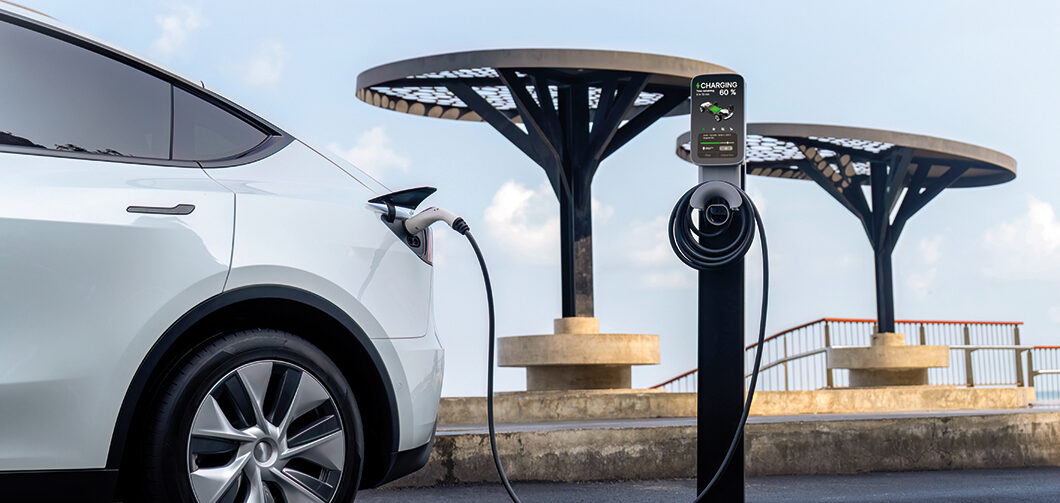
Egypt’s efforts to promote EV ownership center on building more charging stations. “Infrastructure is improving,” said EBD.
However, a closer look reveals a problem: “Availability remains concentrated in affluent suburban areas and major urban developments,” said EBD. “Expanding nationwide infrastructure remains essential if EV ownership is to become practical for larger segments of the population.”
Another infrastructure question is whether the Ministry of Electricity can ensure reliable electricity supply for new and existing stations amid rising EV sales. “A successful electric mobility ecosystem also requires reliable electricity networks, smart charging systems, maintenance infrastructure, digital integration and cybersecurity protections,” said EBD. “The government’s recent discussions around digital systems and infrastructure modernization suggest officials increasingly recognize that EV adoption depends on building an integrated ecosystem rather than simply increasing vehicle imports.”
That should open the door to “private-sector investment, [as it would] play a major role over the next several years.”
Setting priorities
To drive EV sales growth beyond ICE cars, private investors need to prioritize the EV ecosystem, not just offer more EVs or model options.
According to EBD, “For investors and business leaders, the real question is no longer whether electric vehicles will grow in Egypt, but whether the country can build a sustainable ecosystem around them that extends far beyond car ownership itself.”
Opportunities span manufacturing ecosystems, supply chains, battery technologies, infrastructure systems, software integration, and export logistics.
To succeed, these ecosystems must be commercially viable against regional competitors. “Egypt’s success in electric vehicles will depend less on consumer adoption alone and more on whether the country can become industrially competitive,” noted EBD. “Countries that successfully position themselves inside these supply chains may capture significant long-term economic value.”