

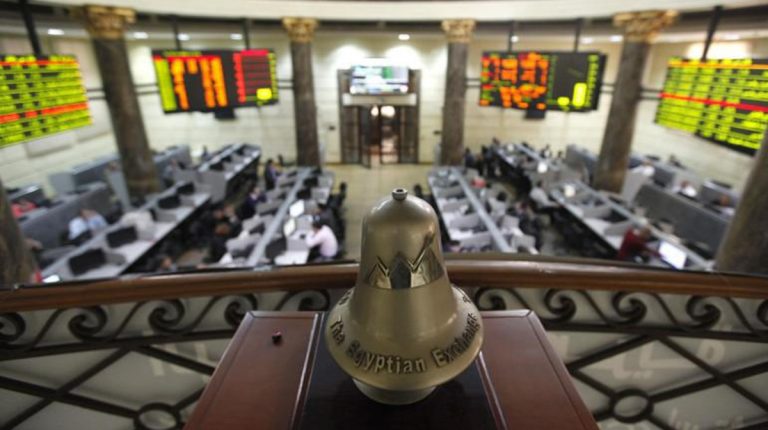

Randa Hamed of OKAZ Asset Management attributes the market’s sharp retreat to geopolitical uncertainty, profit-taking and competing IPO subscriptions, while linking dollar pressure to wider investor anxiety and capital outflows.
Egypt’s benchmark EGX 30 fell below 50,000 points on Sunday, October 25, as selling pressure spread across the stock market. Investors faced mounting geopolitical uncertainty, profit-taking after earlier gains and initial public offerings (IPOs) competing for available liquidity.
“This is panic selling,” Randa Hamed, managing director and board member of OKAZ Asset Management and a former board member of the Egyptian Exchange (EGX), told Business Monthly in exclusive commentary.
Hamed identified three overlapping drivers of the decline: geopolitical tensions, profit-taking and liquidity shifting towards IPO subscriptions. Together, she said, these factors intensified an initial market correction into a broader sell-off.
Profit-taking gives way to panic
The EGX 30 had previously climbed to approximately 56,000–57,000 points before investors began taking profits, according to Hamed. She said the initial retreat was consistent with a normal correction, but sentiment deteriorated as geopolitical tensions intensified and new IPOs competed for investor funds.
The benchmark tracks 30 companies selected primarily for liquidity and trading activity, with index weights adjusted for free float. Its decline reflects pressure on major listed stocks, although individual companies have experienced different trading conditions.
Hamed also pointed to the growing number of retail investors, including approximately 560,000 new market participants since the beginning of the year. Many, she said, had entered through digital onboarding and mobile applications.
While welcoming broader participation, she cautioned that inexperienced investors may be more vulnerable during sudden market corrections.
“When you have young people who have not seen profit-taking before, herd mentality begins,” she said, describing how individual decisions to sell can prompt others to follow, amplifying downward pressure.
In her assessment, fear-driven selling has reinforced the decline, turning an ordinary correction into a more pronounced retreat.
The dollar and equities: A vicious cycle
The stock market decline has coincided with renewed pressure on the Egyptian pound. Central Bank of Egypt data cited in the original draft put the weighted-average exchange rate at EGP 55.31 per dollar on October 22.
Hamed cautioned against treating the dollar’s rise as a direct cause of falling share prices. Instead, she described a “vicious cycle” in which geopolitical uncertainty prompts foreign investors to reduce exposure to Egyptian assets, potentially increasing demand for dollars and adding pressure on the pound.
Currency weakness can, in turn, unsettle domestic investors and contribute to further equity selling. Hamed also cited the attraction of higher interest rates abroad as a factor influencing international capital flows.
She said foreign investors’ withdrawals had been more concentrated in government debt instruments than in listed equities, a distinction that matters when assessing the relationship between capital movements, exchange-rate pressure and stock-market performance.
The dollar’s appreciation is therefore not, in her view, a standalone explanation for the sell-off. Rather, currency and equity-market pressures reflect broader concerns about risk and investor confidence.
IPOs add to liquidity pressures
New offerings are creating additional competition for investors’ funds. Hamed said some investors may be selling existing holdings to free up cash for IPO subscriptions, adding to selling pressure in the secondary market.
Banque du Caire is among the institutions associated with Egypt’s IPO pipeline. However, the timing and status of individual offerings should be assessed separately when determining their immediate impact on market liquidity.
During a correction, investors must weigh whether to retain existing holdings or redirect funds towards new offerings. When IPO subscriptions coincide with heightened geopolitical uncertainty, these competing demands can intensify pressure on listed shares.
Hamed said this overlap helped turn the initial correction into panic selling, making the timing of a sustained recovery harder to predict.
Recovery could take several weeks
Despite the sharp decline, Hamed expects the market to attempt to stabilise, although a sustained recovery could take several weeks.
She identified 50,000 points as an important threshold for the EGX 30 to regain, with a potential trading range of 50,000–53,000 points over the following two to four weeks as investors reassess market conditions.
Hamed also identified 52,753 points as a level to watch, saying, “I think we’ll be okay” once the index moves above it again.
Her outlook points to a period of consolidation rather than an immediate return to previous highs. In the near term, market direction will depend on geopolitical developments, currency movements, investor sentiment and demand for liquidity amid competing investment opportunities.
For investors, the key question is whether selling pressure will ease as the market stabilises or whether continued uncertainty will prolong the correction.