

Since 1977, the U.S. Federal Reserve (Fed) has used interest rates to achieve two primary targets. The first is to achieve “maximum employment,” which requires a rapidly growing GDP (low interest rate). The second is to “stabilize prices,” which calls for low GDP growth (relatively high rates). A third, lesser-known goal is to maintain a “moderate long-term interest rate” to limit changes.
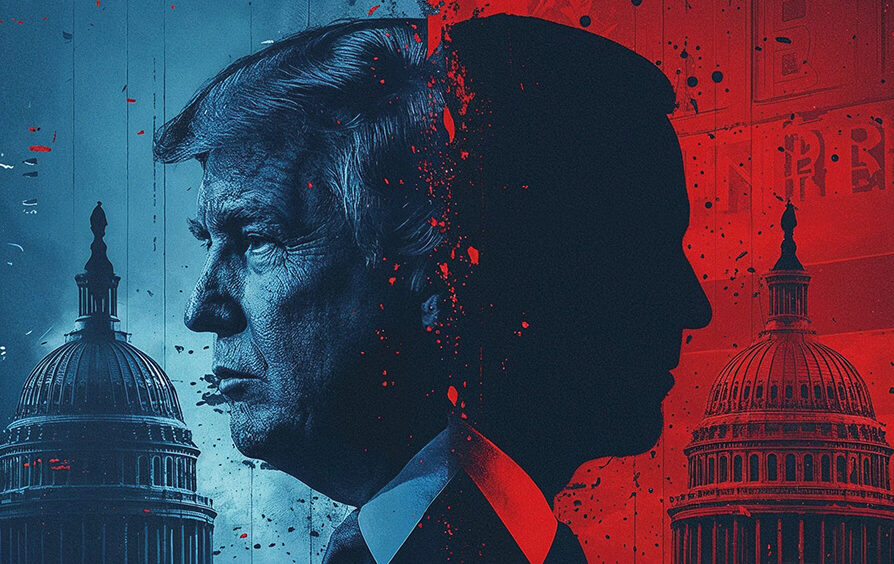
Starting in May, balancing these targets could become lower priorities, as the Fed will have a new chair appointed by President Donald Trump. “A new Fed chair aligned with Trump’s views might compromise the Fed’s independence,” Etf.com, an investment platform, said in December.
That means the new Fed chair could follow Trump’s instructions, not economic data. For central banks, such as Egypt’s, that monitor and react to Fed decisions, that might be a game-changer.
New era
Trump has yet to announce who will lead the Fed for four years starting in mid-May. “I guess a potential Fed chair is here,” Trump said in December during a White House event. “He’s a respected person, that I can tell you.”
In December, Reuters, Bloomberg, CNBC, The Economist and Financial Times, among others, predicted the choice would be current economic adviser Kevin Hassett, who led the White House Council of Economic Advisers during Trump’s first term.
Reuters noted Hassett’s office is in the West Wing of the White House with “direct access to the president” and he has helped shape Trump’s views on trade, economic issues and monetary policy.
Jeff Mason, Reuters White House correspondent, said Hassett “has proven his loyalty to the president through regular, if not weekly, television appearances on CNBC, Fox News and other channels, where he has endorsed Trump’s sweeping import tariffs and calls for lower interest rates.”
Other candidates are Fed governors Michelle Bowman and Christopher Waller; former Fed governor Kevin Warsh; and Rick Rieder, chief investment officer of Global Fixed Income at BlackRock, a private investment firm.
Regardless of who gets the job, “Trump has made it no secret he prefers someone who favors lower [interest] rates,” Mason stressed.
Good outlook
The U.S. economy is poised to grow in 2026, despite interest rates of about 4%, compared with 0% to 0.25% in 2008 and 2019. “A modest economic tailwind fueled by expansionary fiscal policies, rate cuts by the Federal Reserve, the full expensing of capital investments and deregulation should push overall growth in the United States to an above-trend 2.2% in 2026,” RSM, a consultancy, said in a December research note.
RSM also “reduced … probability of a recession over the next 12 months to 30% from our previous estimate of 40%.”
RSM downplayed the effect of Trump policies on GDP growth. “The noise from the policy sector will most likely ease as trade-related uncertainty winds down and the economy adjusts to permanently higher trade taxes,” the note said. “We think that the tariffs’ drag on growth of nearly 1% in 2025 will fade, helping to spur a solid reacceleration of growth in 2026.”
Their 2026 “baseline” forecast is for GDP growth of 2.2%, unemployment 4.5% and inflation 2.7%. The “optimistic” scenario sees GDP growth exceeding 2.5%, unemployment below 4.1%, and inflation surpassing 2.3%. The “pessimistic” scenario envisions the U.S. economy entering “stagflation,” where prices rise despite declining GDP and consumer purchasing power.
Joe Brusules, RSM’s chief economist, said in December the “anticipation [is] that the Fed will cut its policy rate to 3% [in 2026].” “The primary risk to the [U.S.] economy [in 2026] continues to be the affordability crunch associated with our stagflation-lite baseline scenario that includes rising inflation and slower real wage growth.”
“Trump directive”
Economic theory states that raising trade barriers makes local producers more competitive as imports become more expensive. Meanwhile, lower interest rates mean cheaper debt financing and an active stock market for companies seeking equity funding.
A March statement from the White House read, “Trump is on a mission to make America the manufacturing superpower of the world once again … Companies from around the world are responding with new investments as President Trump levels the playing field for American workers and businesses.”
Trump already imposes double-digit tariffs on almost every nation. Missing are low interest rates (4% now versus 0.25% pre-pandemic). In August, U.S. news outlets reported Trump wants a 1% interest rate, last seen in 2022. “Trump wants lower interest rates to try and offset the expected economic slowdown caused by increasing consumer costs and stalling global trade, thanks to his wide-sweeping tariffs,” reported Emmy Hawker, a journalist at Trustnet, an investment platform, in August.
Trump vs. the economy
A massive or unwarranted drop in interest rates could spike inflation in 2026, leading to a marked decrease in individual and corporate consumption as prices rise. That could be offset by taking on more, less expensive debt. However, that might put the U.S. economy in a precarious position, as excessive leverage was a primary cause of the 2008 global financial crisis.
Another potential hazard from significant drops in interest rates would be a surge in high-risk investments. “Historically, low interest rates have tended to create a very supportive environment for risk assets,” Tina Fong, economist at Schroders, an investment firm, told Trustnet in August.
Stefano Amato, multi-asset fund manager at M&G Investments, told Trustnet that low rates would “potentially fuel outperformance in more speculative areas, like meme stocks, or hard assets such as gold and bitcoin.”
Fong stressed any economic benefits of low interest rates would be short-lived. “While [low interest] could support growth in the short term, it may also exacerbate debt sustainability concerns. In turn, the rising risk of a global fiscal crisis could push [long-term] bond yields higher as investors demand greater compensation for sovereign risk.”
Shadow looms large
With increasing fears the next Fed chair will appease Trump, concerns about the Fed’s independence are in the spotlight.
“Knowing that the rates will be based on well-researched data, and not political whims, assures the world that the U.S. economy will remain relatively stable and its markets will stay rational — barring unexpected events,” the Center for American Progress (CAP), a policy institute, said in a September research note. “Few foreign investors want to risk their money in a volatile, unpredictable environment.”
Additionally, markets doubting the Fed’s independence could threaten U.S. global economic leadership. “The Federal Reserve’s independence underpins the dollar’s status [as] the world’s primary reserve currency [and] the most widely used currency in international trade,” noted CAP.
Such volatility would influence monetary policies of wealthy and emerging economies’ central banks, which prioritize maintaining an interest gap to the Fed’s rate to prevent a dollar exodus.
In the MENA region, outcomes would vary. GCC economies might become volatile because their currencies are pegged to the dollar, which means they could not unilaterally adjust their interest rates. Countries like Egypt with non-pegged currencies, however, will have more freedom to change monetary policies to boost their economies without as much concern about dollar outflows to the United States.