

As Egypt seeks to strengthen its capital markets and mobilize greater domestic savings for productive investment, understanding the barriers to investor participation has become increasingly important.
The Egyptian Exchange has introduced a range of reforms and innovative products in recent years, yet many retail and institutional investors remain underrepresented. This interview explores the EGX’s strategy for supporting long-term economic growth.
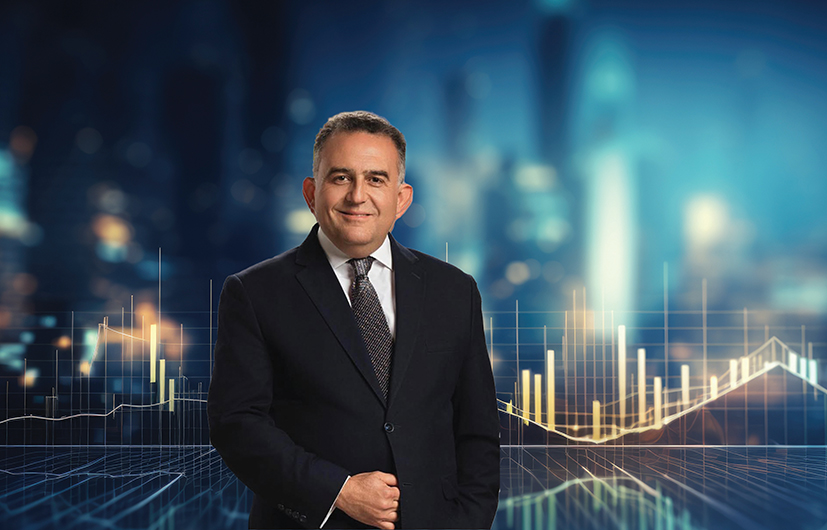
The conversation highlights ongoing efforts to modernize the market through new products such as exchange-traded funds (ETFs), derivatives and enhanced short-selling mechanisms, while also strengthening infrastructure and investor education. To build a vibrant capital market, EGX Executive Chairman Omar Radwan emphasizes that increasing financial awareness and promoting long-term investing are just as important as regulatory reforms.
The EGX aims to introduce additional investment vehicles, including robo-advisory solutions, hedge funds and new insurance funds, while fostering a more active derivatives market and stronger liquidity framework.
Together, these initiatives are designed to broaden investor participation, improve price discovery, and position Egypt’s capital market as a more attractive destination for both retail and institutional investors.
Radwan believes that expanding financial literacy, improving market accessibility, and diversifying investment products are critical to attracting a broader investor base.
In his sit–down with Business Monthly, Radwan outlines how recent market reforms, new investment instruments, and technology-driven solutions are helping transform Egypt’s capital market into a more liquid, sophisticated, and inclusive investment ecosystem.
Note: The interview has been edited for length and clarity.
Business Monthly: Many Egyptians continue to favor bank deposits, real estate, and gold over capital market investments. In your view, what are the most significant misconceptions that discourage broader participation in the capital market, and what steps are needed to address them?
Omar Radwan: One of the main misconceptions is that investing in the capital market is only suitable for experienced or professional investors. In reality, there are investment products suitable for different levels of experience, objectives, and risk appetites.
Investors should also recognize that the Exchange offers a range of securities and fixed-income products that can provide attractive returns compared with other less liquid tools.
Technology is making the capital market more accessible. Online trading, digital onboarding, and the growing availability of financial information on social media are helping younger generations, in particular, become more interested in investing.
We believe that expanding financial literacy, improving access to reliable market information, and encouraging a long-term investment culture are essential to increasing participation.
Every Egyptian should have an incremental investment plan in which they invest a fixed amount of their monthly income, according to their risk tolerance, to create wealth in the long run.
BM: The Egyptian capital market has introduced a number of new products and mechanisms in recent years, including short selling, futures contracts, and exchange-traded funds (ETFs). How have these developments contributed to enhancing market depth, liquidity, and efficiency, and what impact have they had on investor participation?
Radwan: We have been working to develop the market infrastructure and mechanisms to support greater liquidity, efficiency, and investor participation.
Lending & borrowing shares, for example, were introduced in 2019. However, its adoption has remained below its potential. The Egyptian Exchange, in cooperation with the Financial Regulatory Authority and market participants, has therefore been working to enhance the regulatory framework and develop a centralized order book lending model through MCDR, which is expected to be ready very soon.
At the same time, significant efforts are underway to reactivate market makers, which we believe will have a meaningful impact on liquidity, support price discovery, and encourage greater participation.
ETFs are another particularly important product, as they align well with the concept of long-term, incremental investing and passive investment through the Exchange. We have already seen an increase in ETF trading activity, and we expect more ETFs to be introduced to the market, providing investors with simple, diversified access to the capital markets.
The introduction of futures contracts is also particularly important because derivatives can support hedging, risk management, and more sophisticated investment strategies.
The impact should therefore be viewed not only in terms of immediate trading volumes but also in terms of building a broader, more sophisticated market ecosystem that can attract a range of investors, including institutional and professional investors.
BM: Looking ahead, what new investment instruments or market products are being considered by the Egyptian Exchange, and which of these do you believe could have the greatest potential to attract new investors and broaden the range of investment opportunities available in Egypt?
Radwan: The development of the Egyptian capital market is an ongoing process, and the focus is on expanding the range of products available to investors. In my view, products that combine diversification, transparency, and ease of access have particularly strong potential to attract new investors. At the same time, we look forward to a more active derivatives market.
As mentioned, we are also approaching the launch of the enhanced short-selling framework, while continuing our efforts to activate market makers and liquidity providers. These developments are expected to contribute to greater liquidity, more efficient price discovery, and a more active and competitive market.
We also look forward to the introduction of sophisticated roboadvisors, hedge funds, and new private insurance funds to benefit from new regulations.
The objective should ultimately be to create a broader investment ecosystem in which investors can choose products aligned with their investment horizon, risk appetite, and financial objectives.
BM: From the Egyptian Exchange’s perspective, which investment instruments currently available in the market remain underutilized, and what regulatory, educational, or market developments are needed to encourage their wider adoption among both retail and institutional investors?
Derivatives are an important example. Futures on the EGX30 Index and on two of the largest listed stocks were recently introduced to the Egyptian Exchange for the first time.
Therefore, rather than describing these products as underutilized, it is more appropriate to say that they are still new to the Egyptian market. EGX30 Index futures were launched on 1 March 2026, while single-stock futures were introduced at the end of June 2026.
At this stage, our focus is on developing market awareness and helping investors understand how the derivatives market works, including its trading and operational mechanisms, risk-management framework, and practical applications. We are particularly focusing on educating market participants on how derivatives can be used for portfolio hedging and risk management, as well as how to identify and understand arbitrage opportunities between the spot and futures markets.
For institutional investors, the continued development of market liquidity, infrastructure, risk-management tools, and the regulatory framework will be important to support greater participation. For retail investors, the priority is to provide clear and accessible financial education so they can understand the risks and potential uses of these products and how they may fit within a diversified investment strategy.
As the market develops and investors become more familiar with these products and their applications, we expect participation to increase gradually and the derivatives market to become an increasingly important part of the Egyptian capital market.