


Egypt has signed a $420 million agreement with regional renewable energy developer Alcazar Energy to invest in, operate, and modernize the 580-megawatt Jabal El-Zeit wind farm, marking one of the largest renewable energy transactions under the government’s state ownership reform program.
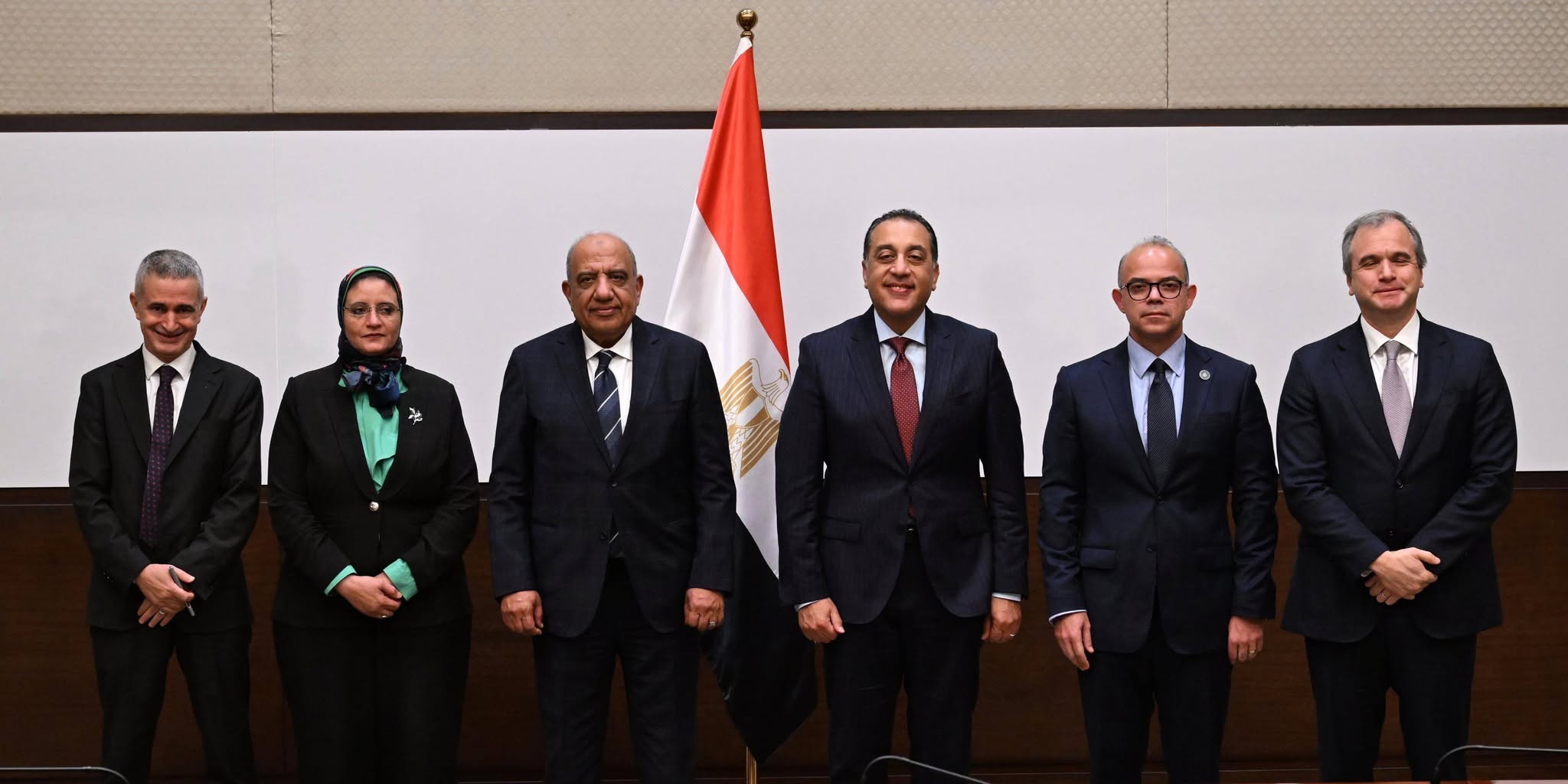
Prime Minister Mostafa Madbouly witnessed the signing of the investment, operation, and power purchase agreements on June 8 between the New and Renewable Energy Authority (NREA), the Egyptian Electricity Transmission Company (EETC), and Alcazar Energy, according to a Cabinet statement.
The agreement forms part of Egypt’s State Ownership Policy Document, which aims to expand private-sector participation in the economy while maximizing returns from state-owned assets. Under the deal, Alcazar will establish a project company to operate and manage the wind farm in the Red Sea governorate, undertake technical upgrades and maintenance, and invest $420 million through external financing sources.
The agreement requires the project to maintain a minimum installed capacity of 580 MW throughout the contract period, while allowing for refurbishment and efficiency improvements. Electricity generated by the facility will continue to be purchased by EETC under a long-term power purchase arrangement.
The transaction represents another step in Egypt’s efforts to attract private investment into strategic sectors while maintaining state oversight of key infrastructure assets.
While the agreement aligns with Egypt’s broader privatization and state ownership reform agenda, its significance extends beyond a conventional asset sale, according to Yasmine Eissa, Assistant Professor at Onsi Sawiris School of Business, the American University in Cairo and Research Associate at the Economic Research Forum
“The renewable energy sector is one of the country’s strategic growth areas and a key pillar of Egypt’s ambitions to become a regional hub for green energy,” Eissa told Business Monthly in an exclusive interview. “The involvement of private capital in such a sector may therefore be viewed as a signal of confidence in Egypt’s long-term energy transition and investment prospects.” She added that investors value policy consistency and reform implementation, and that the agreement may further strengthen confidence in Egypt’s investment climate.
She added that the transaction carries broader implications for investor sentiment at a time when international markets are closely watching Egypt’s reform commitments.
“It suggests that Egypt remains committed to opening strategic sectors to private participation and creating opportunities for both domestic and foreign investors,” Eissa said. “ In a context where investors value policy consistency and the effective implementation of reforms, this deal may further strengthen confidence in Egypt’s investment environment.”
According to Eissa, the structure of the agreement also demonstrates that privatization does not necessarily imply a complete withdrawal of the state from strategic sectors.
“Rather, it reflects a model in which the state retains a strategic and regulatory role while leveraging private expertise and capital,” she said. “This balance between public oversight and private participation may be particularly important in sectors such as renewable energy, where long-term national objectives coexist with the need for investment and innovation.”
Renewable energy at the center of economic policy
The Jabal El-Zeit agreement comes as Egypt accelerates efforts to increase the contribution of renewable energy to its electricity mix and reduce reliance on fossil fuels.
According to the Ministry of Electricity and Renewable Energy, Egypt is targeting a renewable energy share of 45% by 2028, compared with a previous target of 42% by 2030. The revised timeline reflects growing urgency to strengthen energy security, reduce fuel consumption, and attract investment into clean energy infrastructure.
The government has increasingly relied on private-sector developers to drive this transition.
In a recent meeting with Norwegian renewable energy company Scatec, Electricity Minister Mahmoud Esmat reviewed projects totaling approximately 3,600 MW of solar and wind generation capacity, alongside battery storage projects with a combined capacity of 4,200 MWh across the governorates of the Red Sea, Qena, Minya, and Alexandria.
These projects include the second phase of the Obelisk Solar Power Plant in Nagaa Hammadi, which will add another 500 MW to the grid in the coming weeks, as well as a 900-MW wind project at Ras Shukeir scheduled for completion in 2027.
The ministry also announced progress on battery energy storage facilities and plans to establish a battery manufacturing plant with investments estimated at $1.8 billion.
Growing foreign investment interest
The Jabal El-Zeit transaction is part of a broader wave of foreign investment into Egypt’s renewable energy sector.
On June 10, the Ministry of Electricity announced efforts to accelerate cooperation with Saudi Arabia’s ACWA Power and expedite the connection of its renewable energy projects to the national grid.
Among the company’s flagship investments is a $1.5 billion wind energy project consisting of two phases with a combined capacity of 1,100 MW. The first phase is located in Jabal El-Zeit and the second in the Gulf of Suez, with both expected to be connected to the grid by 2027.
According to ministry data, the project is expected to provide electricity to approximately one million housing units, reduce carbon dioxide emissions by 2.4 million tons annually, save around 840,000 tons of fuel per year, and create roughly 6,000 direct and indirect jobs.
ACWA Power is also developing a separate 1,200-MW wind project in South Hurghada scheduled for connection in 2029 and signed a power purchase agreement earlier this year for a 2-GW wind farm valued at approximately $2.3 billion.
The government views these investments as critical to reducing Egypt’s fuel import bill, which has come under pressure from rising energy demand and regional market volatility.
Grid expansion and energy storage
President Abdel Fattah El-Sisi reviewed the latest developments in renewable energy projects during a meeting on June 14 with Prime Minister Madbouly and Electricity Minister Esmat.
According to the Presidency, discussions focused on the implementation of the second phase of national grid enhancement projects, including approximately 105 initiatives aimed at strengthening electricity transmission infrastructure and integrating new renewable energy capacity by 2027.
The meeting also reviewed plans to expand solar energy generation and battery storage systems as part of the country’s strategy to achieve a 45% renewable energy share within the next two years.
Officials highlighted the operation of the first phase of the Obelisk Solar Power Plant, with a capacity of 500 MW, alongside a 200-MWh battery storage facility that was connected to the grid earlier this year.
The Presidency also reviewed progress on the Energy Valley project in Minya Governorate, which includes 1.7 GW of solar generation supported by battery storage systems totaling 4 GWh across Minya, Qena, and Alexandria.
El-Sisi emphasized the importance of expanding energy storage systems to maximize the benefits of renewable energy generation and enhance grid stability, while also calling for increased localization of industries linked to renewable energy technologies.
Beyond electricity generation
Egypt’s renewable energy strategy is increasingly extending beyond power generation to support industrial competitiveness.
In May, the Cabinet reviewed a proposed initiative known as “Industry Sun,” which aims to install 1,000 MW of solar capacity on factory rooftops across approximately 7,000 industrial facilities.
Officials estimate the program could significantly reduce electricity costs for manufacturers, lower natural gas consumption, ease pressure on the national grid, and improve the competitiveness of Egyptian exports through a lower carbon footprint.
The initiative forms part of a broader strategy to position Egypt as a regional hub linking industry, renewable energy, and green supply chains.
Against that backdrop, the Jabal El-Zeit agreement represents more than a standalone investment. It reflects the government’s attempt to align privatization efforts with strategic sectors capable of attracting foreign capital, supporting economic reform objectives, and accelerating Egypt’s transition toward a cleaner and more diversified energy system.
As the country seeks to expand renewable generation while maintaining fiscal discipline and investor confidence, the success of the Jabal El-Zeit model could help shape future transactions under Egypt’s state ownership and privatization agenda.