
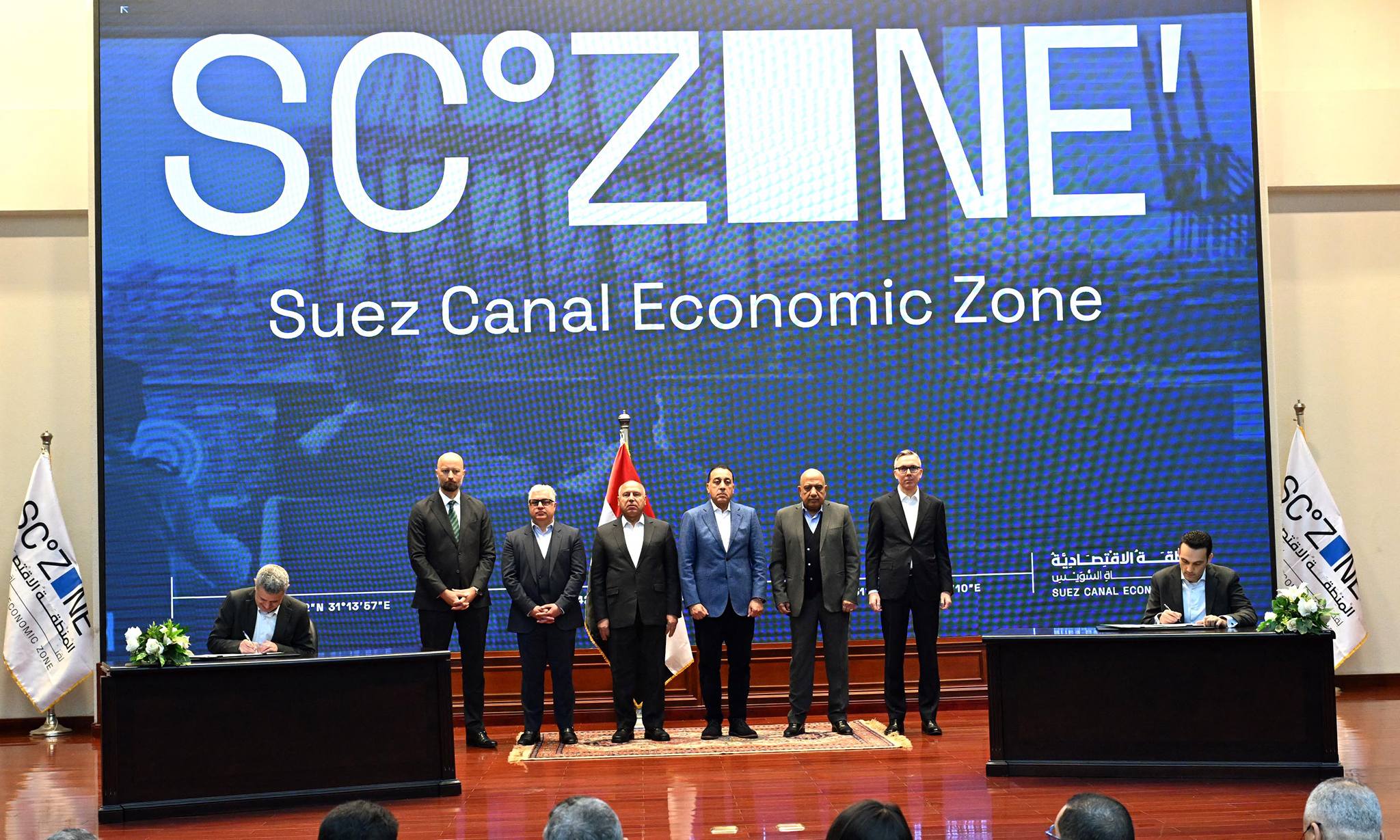

Egypt has signed agreements worth more than $1.8 billion to develop two major clean energy and battery manufacturing projects, marking one of the country’s largest steps to date toward building a fully integrated renewable energy ecosystem.
The agreements were signed on January 11 and witnessed by Prime Minister Mostafa Madbouly ahead of his visit to the Suez Canal Economic Zone, underscoring the projects’ strategic importance to Egypt’s energy and industrial ambitions.
Energy Valley: a new model for round-the-clock clean power
The first project, led by Norway-based renewable energy company Scatec, will see the development of the Energy Valley project in Minya Governorate. One of the largest integrated renewable energy projects globally, Energy Valley will include 1.7 gigawatts of solar power generation supported by 4 gigawatt-hours of battery storage located across Minya, Qena and Alexandria. The system is designed to deliver stable, round-the-clock clean electricity to the national grid, a first for Egypt at this scale.
The project also includes the construction of new substations and transmission lines, strengthening grid resilience and enabling the delivery of clean power to industrial centers, particularly in Upper Egypt.
Sungrow factory: anchoring battery manufacturing in Egypt
The second agreement involves China’s Sungrow, which will build a battery energy storage systems factory in the Ain Sokhna industrial zone within the Suez Canal Economic Zone. Covering 50,000 square meters, the plant will be the first of its kind in the Middle East and Africa, with an annual production capacity of up to 10 gigawatt-hours. Commercial production is scheduled to begin in April 2027, and the facility is expected to create around 150 direct jobs.
Part of the factory’s output will be supplied directly to the Energy Valley project, creating a vertically integrated clean energy value chain linking domestic manufacturing with renewable power generation.
As part of the deal package, Egypt signed a long-term power purchase agreement between the Egyptian Electricity Transmission Company and Scatec, as well as land usufruct agreements for both the Minya solar site and the Ain Sokhna manufacturing facility. A supply contract for battery storage systems was also finalized.
A dual milestone for Egypt’s energy future
Together, the two projects represent a shift in Egypt’s clean energy strategy toward combining large-scale renewable generation with localized industrial production. By pairing solar power with domestic battery manufacturing, Egypt is positioning itself to build a more resilient, competitive and sustainable energy economy.