

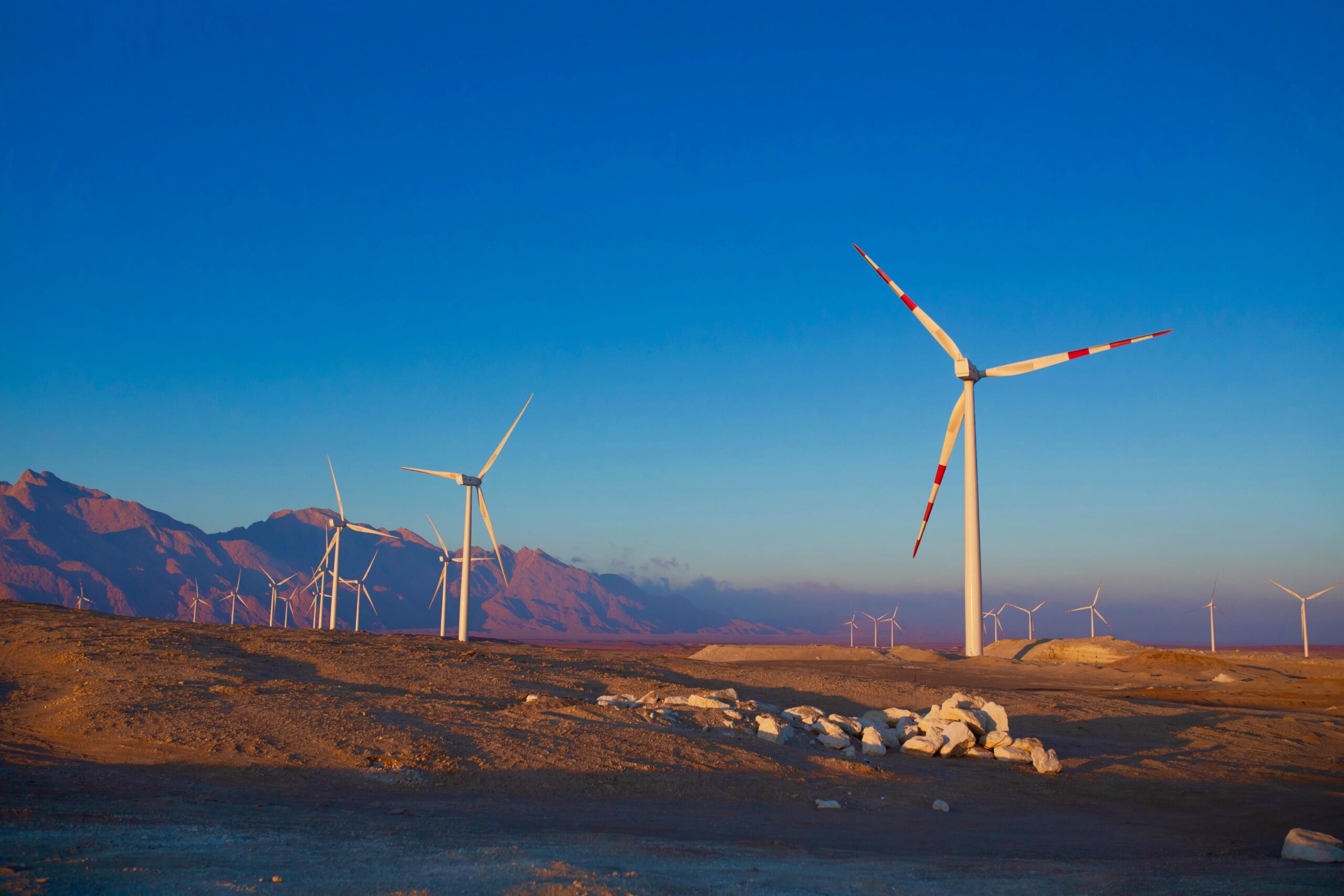

Egypt’s push to become a regional renewable energy hub is gaining momentum, with international developers scaling up investments across the Gulf of Suez. At the center of this expansion is a 900 MW onshore wind project near Ras Shokeir, led by ENGIE, which executives say reflects both the strength of Egypt’s natural resources and the growing maturity of its energy market.
Additionally, ENGIE’s renewable portfolio in Egypt currently consists of two other operational wind farms: the initial 262.5 MW Ras Ghareb facility and the 650 MW Red Sea Wind Energy (RSWE) project. Once the Ras Shokeir project is completed, the consortium’s total wind capacity in the country will reach approximately 2 GW, expanding its footprint in the Gulf of Suez and supporting Egypt’s broader renewable energy targets.
In an exclusive interview with Business Monthly, Hans Bruins, Chief Executive Officer, Ras Ghareb Wind Energy, said the company’s decision to anchor its largest global onshore wind project in Egypt was driven by a combination of natural advantage and infrastructure readiness.
“The decision was driven through a combination of natural resources,” Bruins said, noting that wind conditions in the Gulf of Suez “are among the most favourable globally,” supported by land availability and grid capacity that allows “these outsized quantities of power to be injected into the grid without the risk of curtailment, which is a factor we frequently encounter in other geographies.”
A flagship project takes shape
The Ras Shokeir wind farm will be developed under a 25-year Build-Own-Operate agreement with the Egyptian Electricity Transmission Company, providing long-term revenue visibility. The project is backed by a consortium including ENGIE (35%), Orascom Construction (25%), and Aeolus (40%), an African renewable platform of Toyota Tsusho Corporation.
Once operational in mid-2028, the project will become ENGIE’s largest onshore wind asset globally. Financial close is expected by early Q3 2026, with phased commissioning to begin by late 2027.
Local value and industrial impact
Beyond power generation, the project is expected to drive local economic impact. Bruins said the wind farm “will employ 99% Egyptian nationals, with the majority recruited from the local community in Ras Ghareb.”
He added that ENGIE is also “committed to localising wind energy technology,” noting that “for our upcoming project, 50% of towers will be manufactured in Egypt.”
Financing and grid expansion
The project’s financial structure is anchored by its long-term power purchase agreement, which Bruins described as “the cornerstone of the project,” adding that “without a bankable PPA, financing a project of this magnitude would be a significant challenge.”
Egypt has also moved to strengthen grid infrastructure to support renewable expansion. In November 2025, Egypt and Germany signed a €50 million debt swap agreement with KfW Development Bank to fund grid connections for wind projects in Ras Ghareb and Jebel Zeit.
A growing renewable pipeline
The Ras Shokeir project is part of a broader national push to scale renewable energy capacity. As of May 2025, Egypt had 3,022 MW of installed wind capacity, split between government and private projects.
New developments are accelerating. The Suez Wind Energy project is adding 1,100 MW, while authorities are exploring high-elevation sites such as Galala Mountain for hybrid wind and solar developments.
Egypt aims to increase renewables to 42% of its energy mix by 2030 and more than 65% by 2040.
Looking ahead
For ENGIE, the project signals a broader pipeline of opportunities. Bruins said the consortium will “continue to pursue future growth opportunities, including additional wind and solar projects,” highlighting green hydrogen as “a very promising development we are closely following across our businesses.”
As turbines rise along the Gulf of Suez, Egypt’s renewable strategy is increasingly defined by the alignment of natural resources, infrastructure investment, and international capital, positioning the country as a key player in the global energy transition.
This project is a cornerstone of Egypt’s broader strategy to transform the Gulf of Suez into one of the world’s most concentrated hubs for wind power. Egypt has significantly ramped up its ambitions, aiming to generate 42% of its electricity from renewables by 2030. A target recently accelerated to meet surging industrial demand. The ENGIE project joins a formidable lineup of flagship installations, including the recently expanded 650 MW Red Sea Wind Energy complex and the massive 1.1 GW Suez Wind Energy initiative. These developments are not merely for domestic consumption; they form the backbone of Egypt’s goal to become a regional green energy corridor. By linking high-capacity wind farms to the Suez Canal Economic Zone, Egypt is fueling a nascent green hydrogen sector and utilizing international interconnectors to export clean power to Europe and the Middle East, effectively turning its superior wind wealth into a long-term strategic economic pillar.