


Artificial intelligence (AI) is transforming marketing at an unprecedented pace, changing everything from audience targeting to content creation. Yet as technology becomes more powerful, creativity and human insight may become even more valuable.
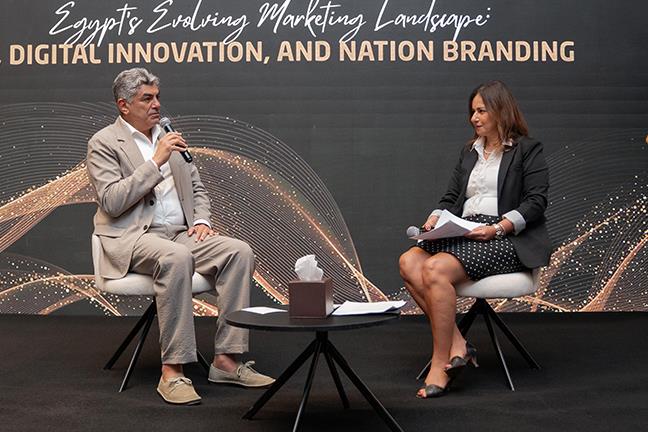
That was the key message from Ihab Gohar, CEO of Animation Advertising, during the opening session of the American Chamber of Commerce in Egypt’s June 15 event, Egypt’s Evolving Marketing Landscape: AI, Digital Innovation, and Nation Branding.
Moderated by Soha Sabry, Co-Chair of AmCham Egypt’s Marketing Committee and Marketing Consultant at The Marq, the discussion examined how AI is reshaping marketing while reinforcing the enduring importance of storytelling and consumer understanding.
From reach To intelligence
Looking back over four decades of industry change, Gohar described marketing as a succession of technological shifts, each redefining how brands compete.
“The power shifted from reach to visibility, then to engagement, then to data,” he said. “Now we are entering the AI age.”
Mass media rewarded reach. The internet made visibility essential, while social media elevated engagement. Today, competitive advantage increasingly comes from interpreting consumer data and translating insights into effective marketing strategies.
“The power now is understanding the data and knowing how to react to it,” Gohar said.
Consumers now shape the brand
Technology has altered marketing channels, but Gohar argued the most profound change has come from consumers themselves.
Rather than passively receiving advertising, consumers now research products, compare reviews, watch creator content, and influence purchasing decisions across digital platforms.
“The consumer is the one who talks about the brand now. It’s no longer the brand talking about itself.”
As a result, successful brands are increasingly focused on building communities rather than simply selling products. Consumers are looking for experiences and identities they can relate to, making emotional connection as important as product quality.
Storytelling drives engagement
For Gohar, storytelling has become one of marketing’s most valuable assets.
“Storytelling is the key word right now,” Gohar said. He cited Egypt’s tourism campaigns as examples of how destinations are increasingly marketed through experiences rather than attractions alone.
The Grand Egyptian Museum has been positioned as a global cultural experience rather than simply a museum, while the Pharaohs’ Golden Parade transformed the relocation of royal mummies into an internationally watched cultural event. “What made it special was the story created around it.”
Experiential events—from festivals to cultural celebrations—play a similar role by creating memories that visitors share long after the experience ends, extending marketing reach organically.
AI expands the playing field
Although AI has sparked concerns about automation, Gohar views it primarily as an accelerator rather than a replacement for marketers.
“AI gives marketers a lot of power in their hands.”
AI can dramatically reduce the time required to develop campaign concepts, generate content, analyze audiences, and prepare presentations. But while machines can process information, strategy, creativity, and cultural understanding remain human responsibilities. “You have to master AI, not let AI master you.”
He also argued that AI is helping level the competitive landscape by giving startups and smaller businesses access to sophisticated marketing capabilities that were once reserved for companies with large budgets. “It’s not about size anymore. Creativity is the major thing.”
Marketing becomes more personal
Looking ahead, Gohar expects AI to accelerate the shift toward hyper-personalized marketing, enabling brands to communicate with individuals based on their interests and behavior rather than broad demographic segments.
That evolution will also reshape marketing careers. Rather than replacing professionals, AI is expected to create demand for marketers who can combine technology with strategic thinking, creativity, and storytelling.
“The marketer who masters AI is the marketer I will recruit.”
As AI becomes increasingly embedded across the industry, Gohar believes the brands that stand out will not necessarily be those with the biggest budgets or the most advanced technology, but those that use both to create experiences and stories that genuinely resonate with consumers.