



In summer, overheated households in summer are becoming a fact of life as temperatures continue to rise year after year. “As extreme heat events become more frequent and widespread, perceptions of cooling are shifting, driving more consumers to consider purchasing an air conditioner (AC),” noted a June paper from the International Energy Agency (IEA). “The number of [those] purchasing their first AC unit will reach new highs in the years ahead.”
For manufacturers, that should be a boon for business. However, significantly more ACs will put mounting pressure on national power grids. “Growing electricity demand for air conditioning is one of the most critical blind spots in today’s energy debate,” said IEA Executive Director Fatih Birol in a July paper.
That requires governments to accelerate investment in electricity generation amid growing geopolitical volatility affecting oil-exporting GCC nations and a growing need to invest in renewable energy infrastructure.
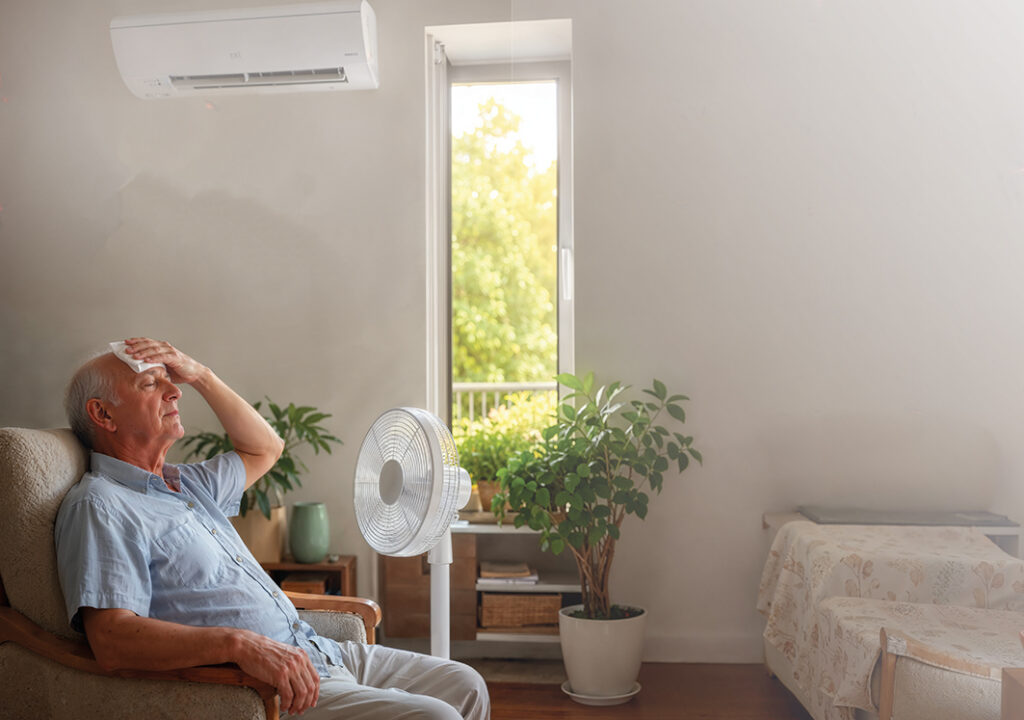
AC adoption
Demand for AC units has risen noticeably over the past five years, as “the world has experienced some of the hottest years on record,” noted the IEA paper.
A June report from the U.S. National Centers for Environmental Information (NCEI) said, “Global surface temperature was 1.09° C above average … This value was 0.09° C below the 2024 record and only 0.02° C above June 2023.”
“The 10 warmest Junes on record have all occurred since 2015, with each of the last eight years (2019 to 2026) ranking among them,” the NCEI noted. “This [June] marked the 50th consecutive June with global temperatures above the 20th-century average.”
Augmenting demand is “rising incomes in many economies with hot climates and record-breaking heatwaves in regions that previously had only limited cooling demand,” noted the IEA. In 2025, “AC unit shipments [were] 25% higher than they were five years ago, fueled by growth largely in emerging and developing economies.”
Furthermore, falling prices coupled with elevated inventories suggest that the number of households purchasing their first AC units will reach new highs in the years ahead,” according to the IEA.
Not all markets are growing equally. While Global South nations (a term used to identify lower- and middle-income countries) dominate sales, their demand for new AC units grew by only 10% from 2024 to 2025, the IEA noted. “In 2025, demand softened in several markets as India experienced unseasonal rainfall, and milder summer temperatures reduced cooling needs across parts of Southeast Asia and Latin America.”
Real growth (about 40% in 2025 versus 2024), according to the IEA, occurred in “the United States and Europe.” Where summer temperatures typically hover between 20°C and 25°C, this July they reached 46°C in Italy and the northern U.S. state of Montana.
Further fueling demand is that the farther north a country is, the hotter it feels. “If the comparison is based solely on air temperature, the Gulf is unquestionably hotter,” Al Ibrahim Al Jarwan, chairman of the Emirates Astronomical Society, told Gulf News in August. “But when it comes to thermal comfort in everyday life, factors such as the sun’s angle, length of the day, direct solar exposure, building design, air conditioning and lifestyle can make European heatwaves feel more exhausting, even at lower temperatures.”
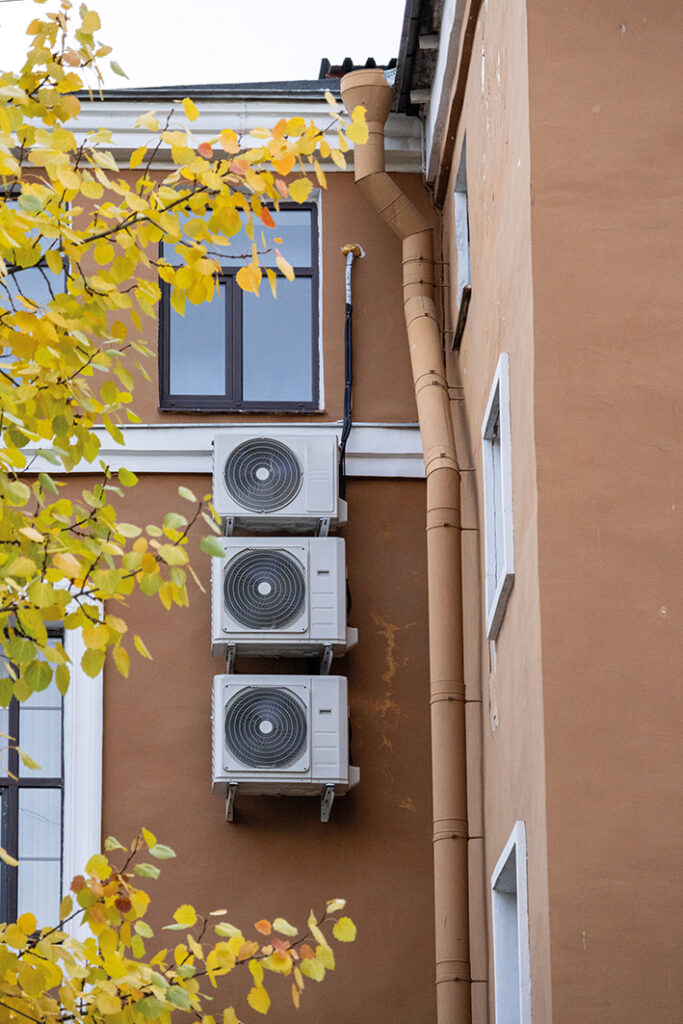
Hotter climate
The El Niño weather phenomenon is also pushing global temperatures higher this year and is expected to continue into 2027. The World Meteorological Organization (WMO) said in a July press release, this weather phenomenon “continues to intensify steadily and is expected to dominate global climate patterns … increasing the likelihood of above-normal temperatures across much of the world.”
The WMO forecasts the peak of El Niño will occur from August to October. During that time, “seasonal-average sea-surface temperature anomalies … should exceed 2.9°C in key monitoring regions.” That is well above the 1.5°C above pre-industrial levels that the Paris Agreement says is the threshold beyond which the risks of permanent environmental damage rise sharply.
The WMO expects “the strongest signals of this trend to extend across Africa, southern Europe, the Arabian Peninsula, the Indian subcontinent, eastern Asia, Central America, the Caribbean, Southern Africa, much of South America and New Zealand.”
Beyond El Niño, which comes every two to seven years, demand for AC units will only increase. “Without decisive policy action, global energy demand for air conditioning could triple by 2050,” noted a July report from the ifo Institute, a major economic think tank based in Germany. “While currently only 27% of households have air conditioning, this share could rise to 55% by 2050.”
Next global crunch?
Such rapid demand will inevitably strain electricity grids. “AC use is expected to be the second-largest source of global electricity demand growth after the industry sector, and the strongest driver for buildings by 2050,” the IEA noted.
Without a transformation of power grids or energy-consumption caps on new cooling devices, Briol of the IEA said the world could face a “cold crunch.” An Organization for Economic Co-operation and Development (OECD) report introduced two scenarios for the future of energy consumption due to cooling equipment.
The baseline scenario “assumes those who require cooling, for climatic reasons, and become able to afford it, will buy and use ACs, and that generation capacity to power them will have to be built,” said the OECD report
This case “also takes into account not just the [environmental] policies and measures that governments around the world have already put in place to curb the growth in energy use, limit energy-related emissions and improve energy efficiency, but also the likely effects of announced policies, as expressed in official targets or plans.”
That scenario “represents a major shift from historical ‘business-as-usual’ trends, which incorporate no meaningful climate policy action,” said the report.
Under these assumptions, the OECD report forecasts that AC demand will increase faster than for any other cooling device, such as fans and evaporative coolers. By 2050, AC units will account for 50% of total demand for cooling devices, up from 25% in 2016.
That means a significant power draw, as ACs consume 2,000% to 5,000% more electricity than electric fans and 200% to 900% more than evaporative coolers. “Globally, the total amount of capacity needed to meet … cooling demand … is projected to jump 395% from 850 megawatts in 2016 to 350 gigawatts in 2050,” noted the OECD.
The second OECD scenario is “efficient cooling.” It focuses on “making ACs more efficient, thanks mainly to much more stringent Minimum Energy Performance Standards, to reduce the energy required to meet future cooling needs.”
Accordingly, “the average energy performance of the stock of ACs worldwide, as measured by the Seasonal Energy Efficiency Ratio, [will] more than double between 2016 and 2050 [compared to] the Baseline Scenario,” the report explained. “Worldwide, the need for additional capacity between 2016 and 2050 just to meet the demand from ACs is 1,170 gigawatts in the Efficient Cooling Scenario, compared with 2,500 gigawatts in the Baseline Scenario.”
That translates to $1.2 trillion in global investments in new power infrastructure between 2016 and 2050. “Taking into account operating and fuel costs in power generation, as well as transmission and distribution costs, the Efficient Cooling Scenario leads to total cumulative cost savings of $2.9 trillion compared with the Baseline Scenario,” said the report.
Adopting OECD’s second scenario is the only way to achieve sustainability. According to the IEA, “A well-designed and properly implemented set of policies can redirect every country from a path of unsustainable and unmanageable cooling energy demand growth to a sustainable and affordable alternative.”