

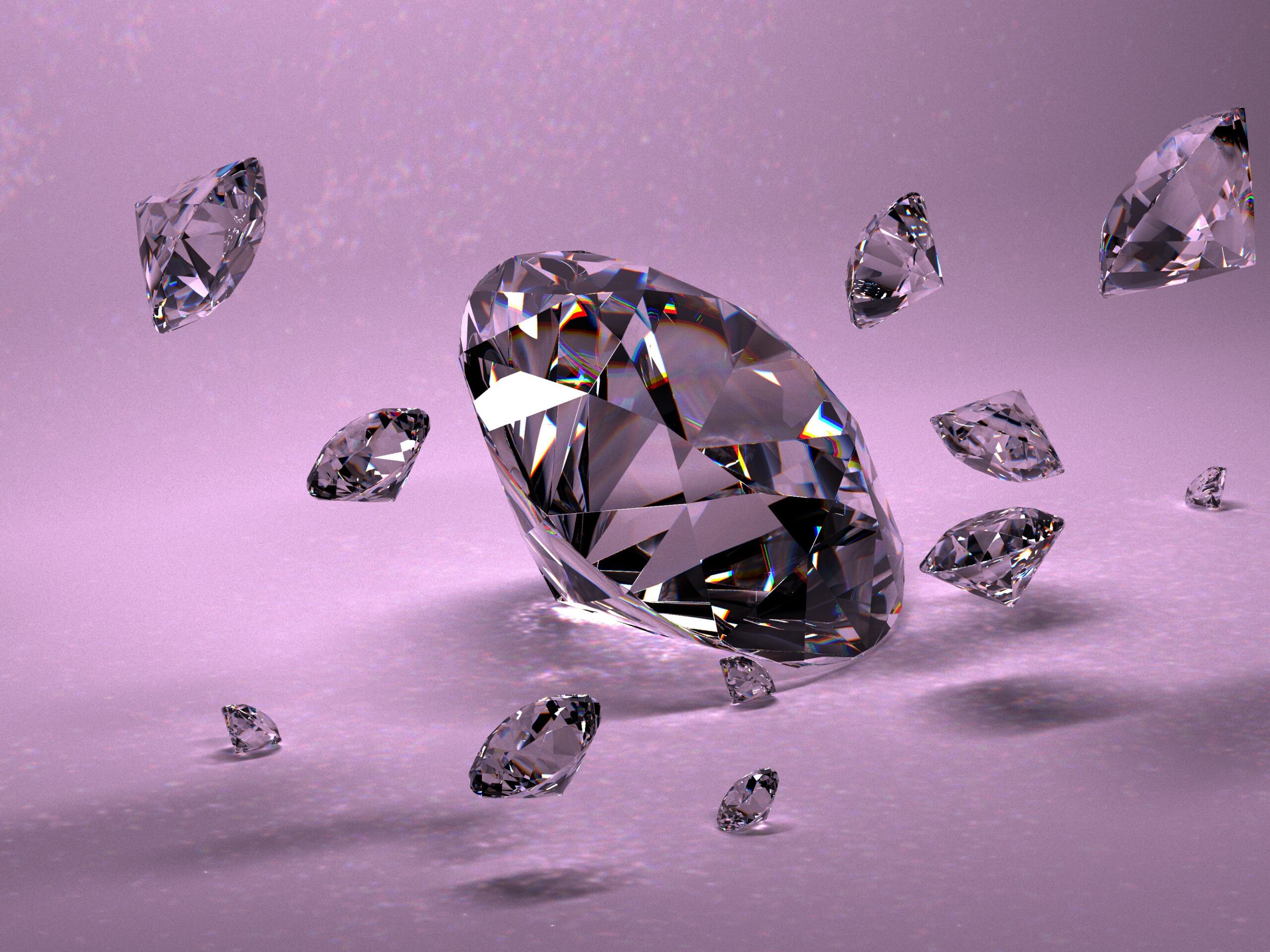

A diamond no longer comes with a single definition of value.
Consumers can choose between natural stones formed deep within the Earth over millions or billions of years and laboratory-grown diamonds produced through advanced technology. While the two have essentially the same chemical composition and crystal structure, they differ in origin, pricing and market positioning.
That distinction is reshaping the industry.
Natural diamonds are navigating a prolonged correction following the post-pandemic demand boom, while laboratory-grown diamonds are giving consumers access to larger stones and higher specifications at lower prices. Rather than one replacing the other, the market is increasingly developing around two distinct propositions: natural diamonds built around rarity and geological history, and lab-grown stones built around accessibility and choice.
The result is a market in which the question is less about which category will win and more about what consumers want from a diamond.
A market correction meets a new competitor
The pressure on natural diamonds can be traced partly to the demand surge that followed the pandemic.
According to De Beers’ Diamond Insight Report 2023, the US accounted for 53% of global polished diamond demand by value in 2022, up from 46% in 2019. The report put global natural diamond jewelry demand at approximately $86.5 billion that year.
Khaled Tarek, Head of Business Development at My Diamond Jewellery House, sees that period as a key driver of today’s correction.
“The market has seen a post-pandemic diamond correction that began with an exceptional surge in consumer demand in 2021–22, mainly in the USA market,” Tarek says.
Miners increased production and retailers replenished inventories to meet the surge. As demand normalized, purchasing slowed and excess inventory accumulated, putting pressure on rough and polished diamond prices.
According to De Beers, rough production fell 22% in 2024 to 24.7 million carats from 31.9 million in 2023, before falling another 12% in 2025 to 21.7 million carats. The company’s 2026 guidance is 21 million to 26 million carats.
The financial impact has also been significant. According to De Beers’ 2025 results, the company recorded a $2.3 billion impairment to Anglo American’s carrying value of De Beers, citing lower forecast prices, changing consumer preferences and surplus rough diamonds. Mining.com reported that the latest impairment brought Anglo American’s total De Beers writedowns to $6.8 billion over three years.
Tarek sees signs that the natural market is beginning to rebalance. At the 2026 India International Jewellery Show, he observed stronger demand, leaner inventories and shortages in some sizes, alongside price increases in parts of the natural market.
“What we have seen is indications that reflect the foundation for this supply rebalance game,” Tarek says.
But the pressure on natural diamonds is not only cyclical.
“The second factor is a structural market repricing caused by the lab grown diamonds,” Tarek says.
Lab-grown moves into the mainstream
Laboratory-grown diamonds have changed the economics of the category because they can be produced at scale while offering essentially the same chemical composition and crystal structure as natural diamonds.
The shift is already visible in the US. According to BriteCo’s 2026 Jewelry, Diamond & Watch Price Index, laboratory-grown diamonds appeared in 51% of newly appraised US engagement rings in the first half of 2026, compared with 47% in 2025 and 5.9% in 2019. BriteCo also found that the median natural-diamond engagement ring sold for $12,961 in 2025, versus $4,557 for a laboratory-grown ring.
For Eslam Salah, Country Manager, Egypt, at the International Gemological Institute (IGI), the rise of laboratory-grown diamonds does not mean the natural category is disappearing.
“Both natural and laboratory-grown diamonds have an established place in today’s diamond market, and both require independent assessment and identification,” Salah says.
“At IGI, we approach the two categories from a scientific and gemological perspective rather than a commercial one,” he adds.
That position also shapes how IGI views the market’s evolution.
“Rather than viewing the future as a competition in which one category replaces the other, I believe the industry is moving toward a more clearly differentiated market,” Salah says.
Two ways to buy luxury
Natural diamonds continue to draw much of their appeal from rarity and geological history.
“Natural diamonds have been always perceived for their rarity, with billions of years of composition under the ground, which has made it symbol of exclusivity and emotional value,” Tarek says.
Laboratory-grown diamonds offer another route into the category.
“As lab grown options appeared, a specific type of luxury buyer has found a shortcut to his/her dream,” Tarek says.
For some consumers, that means buying a larger or higher-quality stone without paying the premium associated with a comparable natural diamond. That shortcut has also brought diamonds within reach of consumers who may previously have been unable to afford them, opening the category to a new segment of non-diamond buyers. For others, origin itself is part of the value.
Salah says consumers are increasingly making that distinction.
“Consumers understand the distinction between natural and laboratory-grown diamonds and make their choices based on factors such as origin, characteristics, design, personal preference, and budget,” he says.
The industry’s challenge is therefore not simply producing diamonds, but communicating clearly what consumers are buying and why the two categories command different prices.
The price question
The laboratory-grown market has undergone a dramatic price reset.
According to De Beers, it announced in May 2025 that it intended to close Lightbox, its laboratory-grown jewelry brand, after wholesale laboratory-grown diamond prices in the jewelry sector had fallen 90% since its launch in 2018.
According to De Beers’ 2026 Diamond Report, synthetic laboratory-grown wholesale prices had declined 93% since 2020, to an average of about $100 per carat.
Tarek sees that fall as a fundamental difference between laboratory-grown and natural diamonds.
“Lab grown diamonds has seen a falling price of 93% since 2020.”
He argues that continued production and falling prices make laboratory-grown diamonds difficult to view as investment assets.
“With intensive production of lab grown options, the market is being self regulated to position the lab grown diamonds for fast fashion and accessories with no resale value for the end consumer,” he says.
That is Tarek’s assessment rather than a universal rule for every laboratory-grown stone. The market data do, however, show substantial price pressure.
According to diamond analyst Edahn Golan, laboratory-grown wholesale prices fell 26% in 2025. But the decline varied considerably by size: three-carat round stones fell 32% year on year, while 1.5-carat stones fell 8%. Golan also reported that some smaller HPHT-grown diamonds increased 10% to 20% as rough-production costs rose.
The distinction matters because it shows that the laboratory-grown market is not moving in one direction at the same pace. Size, production method and supply conditions all affect pricing.
Egypt’s evolving diamond market
The shift has particular relevance in Egypt, where gold has traditionally been associated with both jewelry and wealth preservation.
That makes diamonds a different proposition.
“Natural diamonds cannot be compared to gold as an investment vehicle not just in Egypt but worldwide,” Tarek says.
“Unlike gold as a commodity, diamonds vary widely based on the 4Cs,” he adds.
Cut, color, clarity and carat weight can create substantial differences between stones of the same carat weight, making diamonds fundamentally different from a standardized commodity such as gold.
Laboratory-grown diamonds are also becoming more visible locally. According to L’azurde’s Egyptian website, its ETERNA collection offers laboratory-grown diamond jewelry.
There is still no sufficiently reliable public data establishing the exact natural-versus-laboratory-grown sales split in Egypt, making it premature to say that lab-grown diamonds are replacing natural stones.
What is clearer is that Egyptian consumers now have more choice, with the two categories offering different combinations of price, size, origin and perceived value.
Certification becomes more important
As the market becomes more diverse, independent certification becomes increasingly important.
“The importance of certification therefore goes beyond the category itself,” Salah says.
“Whether a diamond is natural or laboratory-grown, consumers and businesses benefit from having an independent document that clearly establishes what the stone is and describes its measurable characteristics,” he adds.
For Salah, certification is not simply about identifying whether a stone is natural or laboratory-grown.
“I would not view certification as being exclusively about origin,” he says.
“It is about transparency. Origin tells you what the diamond is, while grading tells you about its characteristics. Both pieces of information are important for a transparent marketplace,” Salah says.
That distinction is also important as laboratory-grown stones increasingly reach very high quality levels.
“Laboratory-grown diamonds can already achieve very high levels of cut, color, clarity, and optical performance,” Salah says.
“There is no reason to assume that a laboratory-grown diamond cannot achieve exceptional 4Cs characteristics,” he adds.
But matching a natural diamond on the 4Cs does not make the two products identical.
“However, achieving similar or even identical 4Cs characteristics does not make a laboratory-grown diamond equivalent to a natural diamond in terms of origin, rarity, or market positioning,” Salah says.
The difference begins with how the stone is formed.
“Natural diamonds are formed through geological processes deep within the Earth over very long periods of time, while laboratory-grown diamonds are produced using advanced technological processes,” Salah says.
One industry, two markets
The forces reshaping diamonds are pulling the industry in two directions.
Natural diamonds remain under pressure from excess inventories, changing consumer preferences and competition from laboratory-grown stones, even as production cuts and leaner inventories begin to support parts of the natural market.
Laboratory-grown diamonds, meanwhile, have moved rapidly into the mainstream. According to BriteCo, they accounted for 51% of newly appraised US engagement rings in the first half of 2026.
At the same time, according to De Beers, their wholesale prices have fallen 93% since 2020. The company’s decision to exit Lightbox reflects how dramatically the economics of the category have changed.
Yet neither Tarek nor Salah sees the future as a simple replacement story.
“At the end of the day, they will coexist,” Tarek says. “Every consumer has got his why that dictate his purchasing behavior notably their demographic attributes.”
Salah agrees.
“Ultimately, I believe natural and laboratory-grown diamonds can coexist as distinct categories,” he says.
That coexistence makes transparency increasingly important.
“This makes independent identification and certification increasingly important for the industry as a whole,” Salah says.
“As the market contains different types of diamonds, transparency becomes more valuable, not less,” he adds.
The future of the diamond industry may therefore not be about one category defeating the other, but about two categories serving different definitions of value.
For one consumer, luxury is a stone shaped by geological history and rarity.
For another, it is the size and quality they can afford.
Both can exist in the same market.