

As global investors navigate an increasingly uncertain environment shaped by geopolitical tensions, shifting trade routes, and evolving supply-chain strategies, Egypt is drawing growing international attention.
In an interview with Business Monthly on the sidelines of Standard Chartered Bank’s Global Research Briefing in Cairo on June 10, Bader Al Sarraf, Research Analyst and Associate Director at Standard Chartered Bank, explained why the country is becoming increasingly attractive to global investors and multinational companies despite regional volatility.
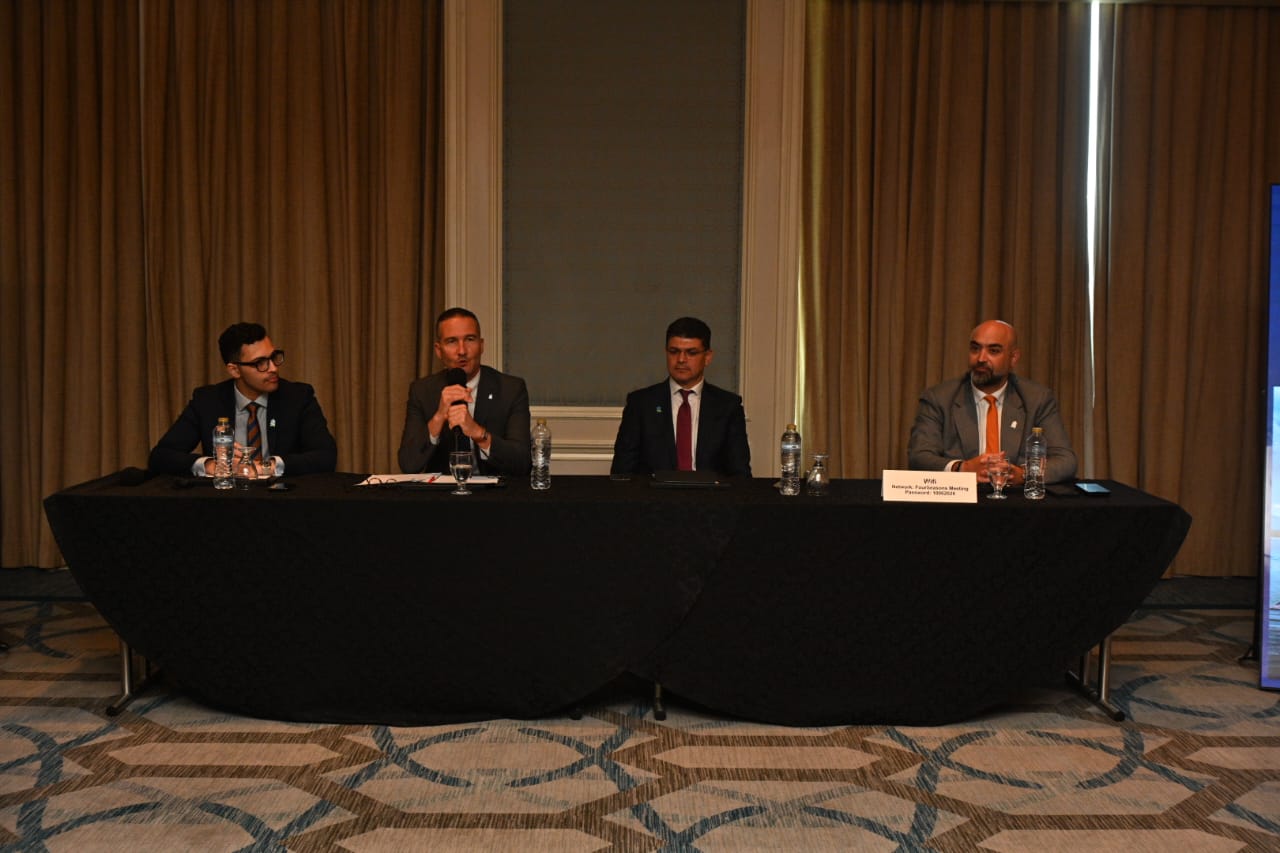
The interview took place during an exclusive media roundtable organized by Standard Chartered to discuss its latest Global Research Briefing report, which examined Egypt’s economic outlook alongside global market developments and the trends shaping investment, trade, and capital flows.
According to Al Sarraf, Egypt’s ability to sustain its reform agenda through successive external shocks has become one of its strongest selling points with investors. While many emerging markets have struggled to navigate global uncertainty, Egypt has continued implementing reforms aimed at strengthening macroeconomic stability and expanding private-sector participation.
The results are visible in the country’s macroeconomic indicators. According to Standard Chartered’s latest forecasts, economic recovery will gather pace over the medium term, with GDP growth expected at 3.6% for FY 2025/2026 before accelerating to 4.7% in FY 2026/2027. According to the Central Bank of Egypt (CBE), net international reserves hit $53.13 billion by the end of May 2026, supported by robust foreign direct investment and resilient capital inflows. Meanwhile, the Central Agency for Public Mobilization and Statistics (CAPMAS) reported that annual inflation was managed downward to 13.0% in May 2026.
“Egypt has been able to continue its reform momentum despite external shocks, and that has been viewed positively by foreign investors,” he said.
From stabilization to growth
While Egypt has made considerable progress in restoring economic stability, Al Sarraf believes the country’s next challenge is converting that stability into sustainable, private-sector-led growth.
Corporate borrowing costs remain elevated. According to official CBE disclosures following its latest monetary policy meeting, the overnight deposit and lending rates stand at 19% and 20%, respectively, posing challenges for businesses seeking to expand. Still, Al Sarraf argues that stronger liquidity positions across the corporate sector and a renewed focus on credit growth could help offset some of those pressures.
Earlier policy measures aimed at stimulating lending were intended to support investment and economic activity, although regional geopolitical developments have added new uncertainty to the interest-rate outlook. Standard Chartered expects policy rates to decline further through 2028 as macroeconomic conditions stabilize, supporting credit growth.
Beyond financing conditions, Al Sarraf points to a less discussed but equally important factor: corporate liquidity. Across Egypt and the wider region, businesses have spent the past several years strengthening balance sheets and building cash reserves, putting many in a far stronger position than during previous crises.
“We’ve seen corporations and institutions build up liquidity and cash balances over a long period of time,” he noted. “Structurally, they’re in a much healthier position today.”
That stronger financial footing, he argues, should help businesses weather external volatility while maintaining their investment plans.
Egypt’s strategic advantage
A central theme of Standard Chartered’s outlook is the growing importance of trade and investment corridors as multinational companies look to diversify supply chains and reduce exposure to geopolitical chokepoints.
For Egypt, this trend presents a significant opportunity. Positioned at the crossroads of Africa, Europe, and the Middle East, the country offers investors access to multiple high-growth markets from a single location — a geographic advantage increasingly drawing attention from both Asian and European investors evaluating long-term expansion strategies.
“What investors are looking at today are trade and investment corridors,” Al Sarraf said. “Egypt offers a large corridor market connecting Europe, Africa, and the wider region.”
Rather than viewing Egypt solely as a transit point, investors are increasingly weighing how the country can serve as a production, logistics, and distribution base for regional operations — a shift driven by companies worldwide reassessing traditional supply chains in search of greater resilience against disruptions caused by conflict, trade disputes, or transportation bottlenecks.
“The current trend is about building alternative capacities and routes,” he explained. “Countries that can offer resilience and connectivity will attract more long-term investment.”
Beyond manufacturing
Although manufacturing remains central to discussions around localization and industrial development, Al Sarraf believes the opportunity extends well beyond the factory floor. Standard Chartered expects continued improvement in foreign direct investment, with investor appetite remaining broad-based across sectors including renewable energy, manufacturing, logistics, banking, finance, and technology.
One of the most significant recent milestones came in the energy sector. According to the Ministry of Petroleum and Mineral Resources, Egypt settled all outstanding arrears owed to international oil and gas companies in June 2026, bringing a backlog that had previously reached $6.1 billion down to zero. Al Sarraf called this a highly positive development that will encourage energy players to ramp up domestic production and ease pressure on external accounts over the medium term.
At the same time, digital transformation is creating opportunities across multiple sectors, playing a key role in expanding the formal economy and improving efficiency. “Egypt has been on a very serious path toward digitalization,” Al Sarraf said. “That spans banking, technology, and the broader corporate sector.”
Rather than relying on a single growth engine, he expects investment momentum to spread across multiple industries, building a broader and more resilient growth story.
Beyond the exchange rate: the fiscal focus
Despite recent stability in the Egyptian pound, Al Sarraf cautions against treating exchange-rate performance as the primary determinant of future sovereign credit-rating upgrades.
Exchange-rate flexibility remains an important pillar of Egypt’s reform program, and was a primary driver when S&P Global Ratings upgraded Egypt’s long-term sovereign credit rating to ‘B’ with a stable outlook. But rating agencies, he notes, tend to focus more heavily on fiscal sustainability and debt metrics.
“I wouldn’t say it’s really the exchange rate that will drive rating upgrades,” he explained. “It is more about fiscal performance, debt affordability, and debt sustainability.”
Egypt’s fiscal indicators are showing strong improvement. According to the Ministry of Finance, the government recorded a primary surplus of 2.9% of GDP during the first seven months of FY 2025/2026, driven by 31% growth in tax revenues. Ministry of Finance statistical reports also show the debt-to-GDP ratio falling significantly, from nearly 96% in FY 2022/2023 to 83.8% in FY 2024/2025, with authorities targeting a further reduction to the 71–73% range by FY 2028/2029.
Improvements in government debt metrics and the ability to maintain fiscal discipline are likely to carry greater weight in future rating decisions than short-term currency movements.
The private sector must lead
Looking ahead, Al Sarraf argues that the most important determinant of Egypt’s long-term success will be the strength and role of the private sector. A key objective of the country’s reform agenda and IMF-supported program is to expand private-sector participation while gradually reducing the state’s footprint in economic activity — a shift he believes is critical not only for growth, but for resilience.
“If the private sector plays a larger role in the economy, it becomes one of the key support pillars during external shocks,” he said.
For investors, the message is clear: Egypt’s stabilization efforts have laid important foundations, but sustaining growth will require continued reforms, investor-friendly policies, and a business environment capable of adapting to rapidly changing global trends.
Keeping the momentum
Asked what Egypt must do next to sustain its progress, Al Sarraf offered a straightforward answer.
First, maintain the pace of reform. “It’s not about implementing reforms for a few years and then stopping,” he said. “It’s about maintaining momentum.”
Second, policymakers must stay responsive to changing investor expectations and global economic trends. “The more adaptive an economy is to what global investors are looking for, the more resilient it becomes over the long term,” he added.
As multinational companies continue searching for stable investment destinations and alternative manufacturing bases, Egypt’s ability to combine reform continuity, strategic geography, and private-sector development may ultimately determine whether it can transform today’s stability into tomorrow’s growth story.