


The Red Sea, Eastern Desert, and Sinai are attractive yet underutilized investment destinations. Protecting their ecosystems is essential to their continued appeal.
In a nutshell, the Egypt Vision 2030 strategy, launched in 2015, aims to “balance and diversify” the country’s economy, promote “innovation and knowledge,” ensure social justice, and protect the environment.
The Red Sea coastline, Sinai, and Eastern Desert are crucial to realizing this strategy. However, the government needs to be careful about which investments it attracts, as these regions are environmentally sensitive.
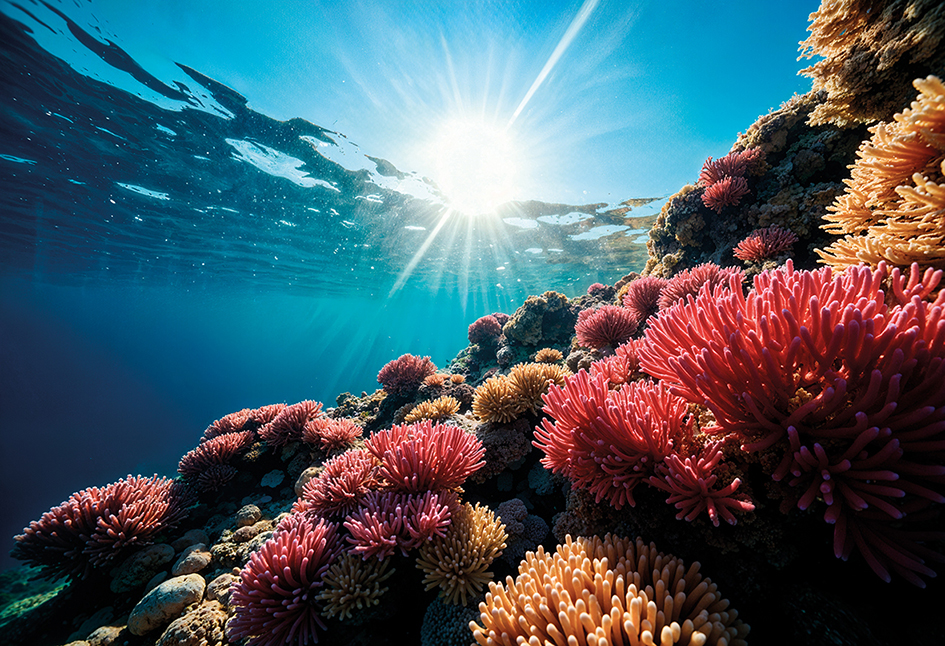
According to the UNDP, “the Red Sea hosts more than 1,000 species of fish and about 350 coral species” that are well-known for their ability to tolerate heat, “making it the last coral refuge globally.” Amid rising global temperatures, the Red Sea will be among the last marine ecosystems to remain intact.
Poor investment decisions and ineffective environmental regulation would seriously damage this ecosystem, significantly undermining the Red Sea’s main appeal to both touristic and non-touristic investors.
Environmental impact
The government requires investors to conduct more detailed environmental impact assessments (EIAs) when building “ports, harbors and marinas,” according to a paper from the Egyptian Environmental Affairs Agency (EEAA).
For all projects, EIA studies must cover “environmental factors in site selection, evaluating alternative sites [and] ascertaining the suitability of the intended location,” the EEAA document said. “Ports, harbors, marinas and related facilities’ [EIAs also] include coastal changes, traffic issues, marine fauna and flora issues, hydrological and water quality issues, [and] noise and visual problems.”
Additionally, “for each of the impacts identified, the EIA should present a mitigation measure [that] will reduce the significance of the impact to an acceptable level [with] the magnitude of any residual impacts also clearly identified.”
Furthermore, EIAs must include an Environmental Management Plan stating a developer’s ongoing commitment.
Finally, an EIA should incorporate a management strategy that demonstrates sound environmental practices will be followed and a monitoring plan that assesses environmental performance and evaluates the success of mitigation measures.
The Red Sea case
Along Egypt’s approximately 1,500-kilometer Red Sea coastline, spanning the Eastern Desert and Sinai, the government has designated six regions as “marine protected areas” (MPAs) under local 1983 and 1994 laws.
Before 2000, protected areas along the Red Sea and its surroundings included Ras Mohamed National Park, Nabq Managed Resources Protected Area (Gulf of Aqaba), Abu Galum Protected Area, and Wadi El Gemal-Hamata Protection Area.
In 2003, the government added Gebel Elba, a mountain range and national park in the Eastern Desert. In December, the Ministry of Environment declared the Red Sea’s “Great Coral Reef,” which spans 2,000 kilometers from the Gulf of Suez and Aqaba to Sudan’s maritime borders, an MPA.
The Ministry of Environment stressed the decision “moves the country closer to integrating environmental priorities into national development planning, particularly as marine ecosystems face mounting climate pressures.”
The umbrella initiative promoting environmentally friendly projects in this region is the Egyptian Red Sea Initiative (ERSI), which launched in 2022 during the U.N. Conference of the Parties (COP27). “It introduces innovative reef-positive finance mechanisms that support conservation, livelihoods and economic resilience,” according to UNDP.
Under ERSI are “the Egyptian Fund for Coral Reefs, … an independent trust fund to finance long-term reef conservation [and] the Coral Reef Business Incubator (CRBI) to support and scale reef-positive micro, small and medium enterprises.” Additionally, ERSI “deploys blended finance instruments and reef insurance to catalyze private and donor investments in reef-positive businesses,” the UNDP noted.
ERSI’s socio-economic offerings include “supporting community-based initiatives such as sustainable ecotourism, organic waste upcycling for urban farming, and aquaculture for reef restoration and alternative livelihoods.”
Lastly, the initiative aims to develop “ecosystem management solutions [that] strengthen marine protected areas through improved management, business planning and financing models, upgrading mooring systems to reduce reef damage from tourism vessels [and] enhancing monitoring systems to guide evidence-based decision-making,” the UNDP explained.
Sustainable marine economy
To promote investment in the Red Sea and its surroundings, the government launched the National Strategy for the Blue Economy (NSBE) in 2023. The World Bank defines the Blue Economy as “sustainable use of ocean resources for economic growth, improved livelihoods and jobs, while preserving the health of the ocean ecosystem.” The European Commission extends the definition to “all economic activities related to oceans, seas and coasts.”
Khaled El-Saqty, dean of the College of Maritime Transport and Technology at the Arab Academy of Science, Technology and Maritime Transport, said, “The five main sectors in the blue economy are aquaculture, coastal and maritime tourism, marine biotechnology, renewable energy and mineral resources.” “Some other sectors are also significant in terms of value and jobs,” he added, “such as maritime transport, fisheries, shipbuilding and repair, and offshore oil and gas.”
Implementing NSBE objectives is a committee comprising representatives from the Suez Canal Authority, the ministries of environment and transport, and the Egyptian Public Authority for Shore Protection, an agency under the Ministry of Water Resources and Irrigation. According to state-owned Ahram English online, the committee’s objectives include developing “nature-based solutions and ecosystem services for biodiversity in the Red Sea.”
To date, the committee has published “Implementing the Blue Economy Roadmap: Marine and Coastal Project Concept Notes,” introduced in February 2024.
Its aim is to “lay the strategic foundation for integrating sustainable practices into Egypt’s marine and coastal sectors,” according to CEDARE, an Egypt-based intergovernmental organization. “This new publication translates these strategies into actionable projects. It serves as a comprehensive project catalog for the [government] in fostering blue economy practices.”
El-Saqty noted, most of the sustainable projects in the Red Sea region are along the Suez Canal, including “investment in handling sea waste in Suez Canal … investment in educating invasive species … investment in tourism across the Suez Canal … investment in energy [and] investment in [an environmentally sustainable] canal.”
Implementation question
Last July, Alternative Policy Solutions (APS), a public policy research project founded by the American University in Cairo, noted: “Egypt has historically, and even more recently, been struggling with finding the right balance, where [investment in the Red Sea] doesn’t overexploit natural or cultural resources in protected areas.”
The APS paper stressed that current environmental regulatory frameworks need updating and stricter oversight. “The heart of the problem is how land inside, or adjacent to, the Red Sea protected areas is allocated and used,” it said. “Despite the rhetoric of conservation, there is still no unified, transparent mechanism for granting land-use rights or concessions to ecotourism investors and operators.”
To address these issues, the APS said, “it is essential first to clarify and define what [investment] means in the context of each individual protected area. This site-specific definition should be accompanied by tailored legislation, rules and guidelines that reflect the unique ecological, cultural and social characteristics of each area.”
The paper also stressed laws and oversight should be “supplemented by the development of detailed land-suitability maps for each protected area,” which “would further guide responsible site selection and ensure [investment] activities are situated in areas where they will not compromise sensitive habitats or biodiversity.”
APS also noted the importance of “strengthening and capitalizing on the role of both central and local environmental authorities responsible for managing protected areas. These entities should be empowered with clear mandates to regulate and direct development activities, ensuring that any tourism or investment aligns with biodiversity conservation and the sustainability goals of the protected areas.”
Another key aspect of promoting clean investment in the Red Sea is to “further raise awareness among the public and decision-makers in other sectors about the importance of developing sustainable land use within protected areas in designated zones,” the APS paper said.
Ultimately, overcoming these challenges should attract significant investment to the Red Sea and its surroundings, as El-Saqty noted, “The blue economy is known to be abundant with opportunities to promote any new sustainable economic activity.”