


Egyptian manufacturers are accelerating investments in alternative energy after a sharp spike in the country’s energy import bill exposed growing vulnerabilities to global supply shocks, pushing both government and industry to act to contain costs and safeguard production.
The urgency became clear as Egypt’s energy bill more than doubled from $1.2 billion in January to $2.5 billion in March, prompting a mix of state-led consumption measures and private-sector shifts toward renewable energy.
Prime Minister Dr. Mostafa Madbouly framed the situation as an immediate fiscal challenge, stating: “We must think carefully; if the energy bill rose from $1.2 billion to $2.5 billion, more than double, and with the stability of our known hard currency resources, how can we provide a difference amounting to $1.3 billion compared to last January if the same consumption pattern continues?”
In response, the government has introduced measures aimed at reducing energy consumption, including optimizing the operational hours of commercial centers, as part of a broader effort to ease pressure on public finances while maintaining economic activity.
“There is no way before us but to reduce this bill by rationalizing consumption, which is a shared responsibility between the government and the citizen to realize the size of the challenge,” Madbouly said.
Officials say the current environment differs from previous crises marked by foreign currency shortages that disrupted industrial production. “Today we are in a completely different situation from what we faced previously; there was a severe crisis in hard currency that led to the inability to provide raw materials and production supplies, while today the assurances of the Federation of Chambers of Commerce and the Federation of Industries indicate the availability of a stock of raw materials and supplies sufficient for several months to come,” he added.
However, the government has left the door open to further intervention if pressures persist. “In the event this crisis continues for a longer period, God forbid, we will be forced to resort to another level of more severe decisions in order to achieve greater rationalization of our spending,” Madbouly said.
“Factories are increasingly turning to IRSC’s solar installations to reduce their reliance on conventional energy sources, which directly lowers operational expenses,” said George Fakhry, Regional Business Development Manager at IRSC for Renewable Energy Solutions. “By offsetting peak electricity demand with clean solar power, manufacturers achieve measurable savings while aligning with Egypt’s national energy efficiency strategy. This contributes to the state’s broader vision of diversifying energy sources, reducing carbon emissions, and ensuring sustainable industrial growth.”
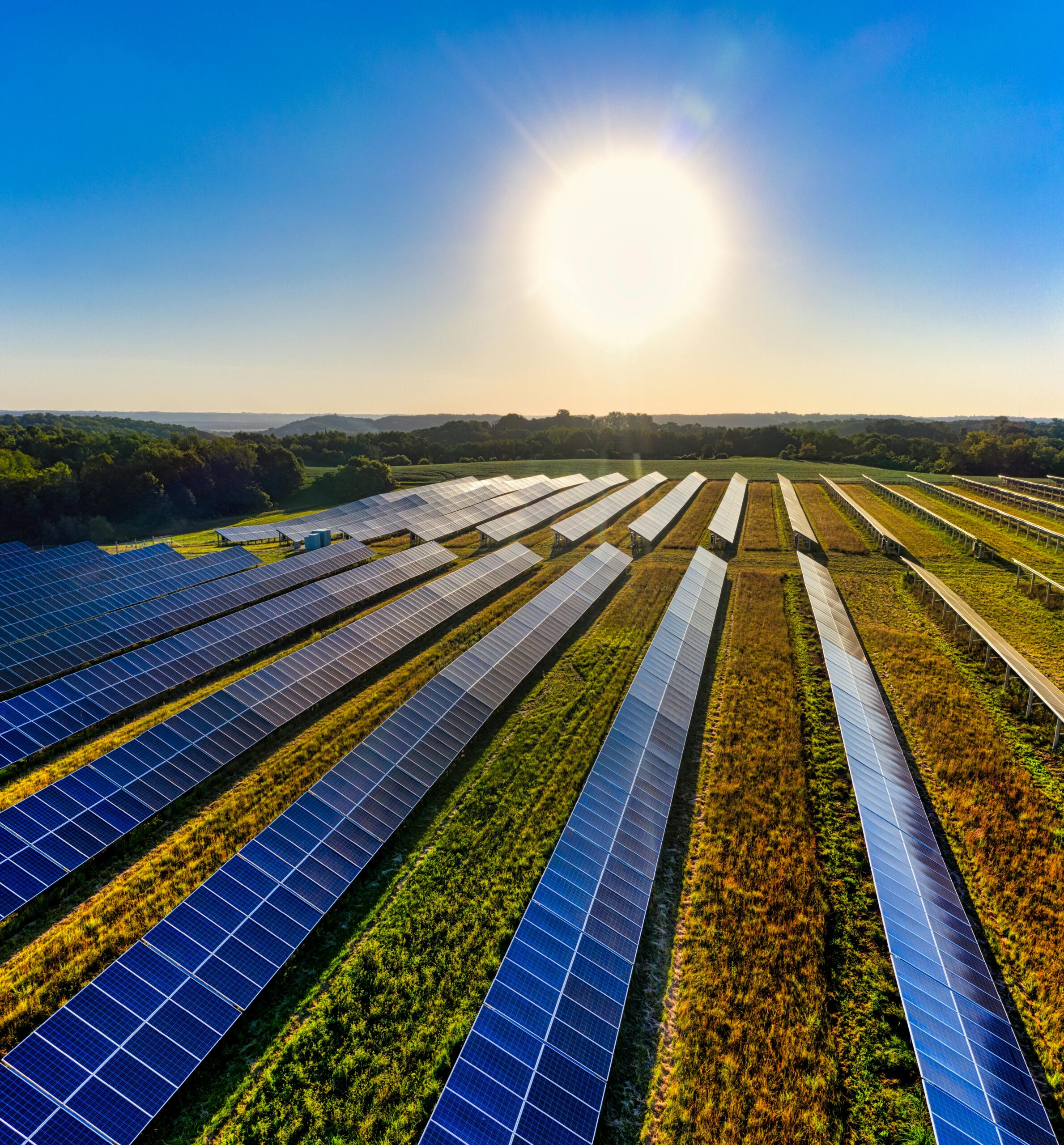
A prime example of this strategy is IRSC’s solarization of the Oriental Weavers complex in 10th of Ramadan City, where a newly inaugurated 2.5 MWp phase marks the start of a total 17 MWp installation. This project, a key part of the manufacturer’s 2025–2030 decarbonization roadmap, will eventually generate 4.5 GWh of clean energy annually and cover nearly 20% of the facility’s total electricity needs. By cutting 2,000 tCO2e in yearly emissions, the partnership highlights how IRSC helps industrial leaders slash operational costs while directly supporting Egypt’s national green energy transition.
Furthering this momentum, IRSC’s subsidiary, Cobalt, recently signed a 30-year PPA with El Nahda Cement to develop and operate a 27 MW solar plant in Qena. Signed in the presence of H.E. Eng. Mohamed Shimi, Minister of Public Business Sector, the agreement provides the facility with cost-competitive, reliable energy while eliminating the need for upfront capital. According to IRSC Chairman Andrew Daniel, this partnership is a critical step in decarbonizing Egypt’s heavy industry, proving that strategic renewable investments are essential for a sustainable, low-carbon industrial future.
Energy reliability has become as critical as cost. “Our integrated solar and storage systems are designed to guarantee reliability,” Fakhry said. “By coupling photovoltaic installations with advanced battery storage, factories can maintain uninterrupted operations even during grid fluctuations or peak demand periods. This ensures manufacturers can run at full capacity without energy-related disruptions, reducing shutdowns, material wastage and reinforcing Egypt’s commitment to industrial resilience.”
Industry uptake appears to be gaining momentum. “With stable supply chains, factory owners are more confident in making long-term investments. These past two years alone IRSC signed over 170 Megawatts across Commercial & Industrial clients both public and private, and Oil & Gas sectors,” Fakhry noted. “IRSC facilitates this by offering modular solar solutions that can be scaled in phases,” allowing manufacturers to expand capacity alongside production.
Still, industry experts caution against viewing renewable energy as a complete substitute for traditional power sources, emphasizing instead the importance of integrated energy strategies.
“Solar Energy is not a slogan, not a luxury, and not a one-size-fits-all answer,” said Abdurrahman Habib, Vice President for Business and Strategy of Maryzad. “It is a strategic industrial tool when designed properly, financed rationally, and integrated into the factory’s real operating model.”
Rather than full independence, manufacturers are prioritizing stability and control. “I would also be careful with the phrase ‘energy-independent,’ because for most industrial players the more realistic and meaningful goal is not absolute independence, but greater energy control, stronger resilience, and lower exposure to external volatility,” Habib said.
“For manufacturers, the strategic benefit is confidence,” he added. “Not the unrealistic promise of complete independence in every case, but the practical ability to run operations with greater stability, lower disruption risk, and better control over energy economics.”
As global energy volatility persists, Egypt’s industrial sector is increasingly treating energy not just as a cost to manage, but as a strategic variable—reshaping how factories plan, invest, and compete.
Egypt’s renewable energy sector is expanding rapidly, reaching 9.26 GW of total capacity and securing a 14.6% share of the national energy mix after adding 1.5 GW in 2025. To sustain this momentum, the government plans to bring another 3 GW of solar and 600 MW of battery storage online throughout 2026. These capacity additions are vital stepping stones toward achieving the state’s Integrated Sustainable Energy Strategy (ISES), which aggressively targets a 42% green energy mix by 2030 which is heavily driven by solar, and 60% by 2040.