

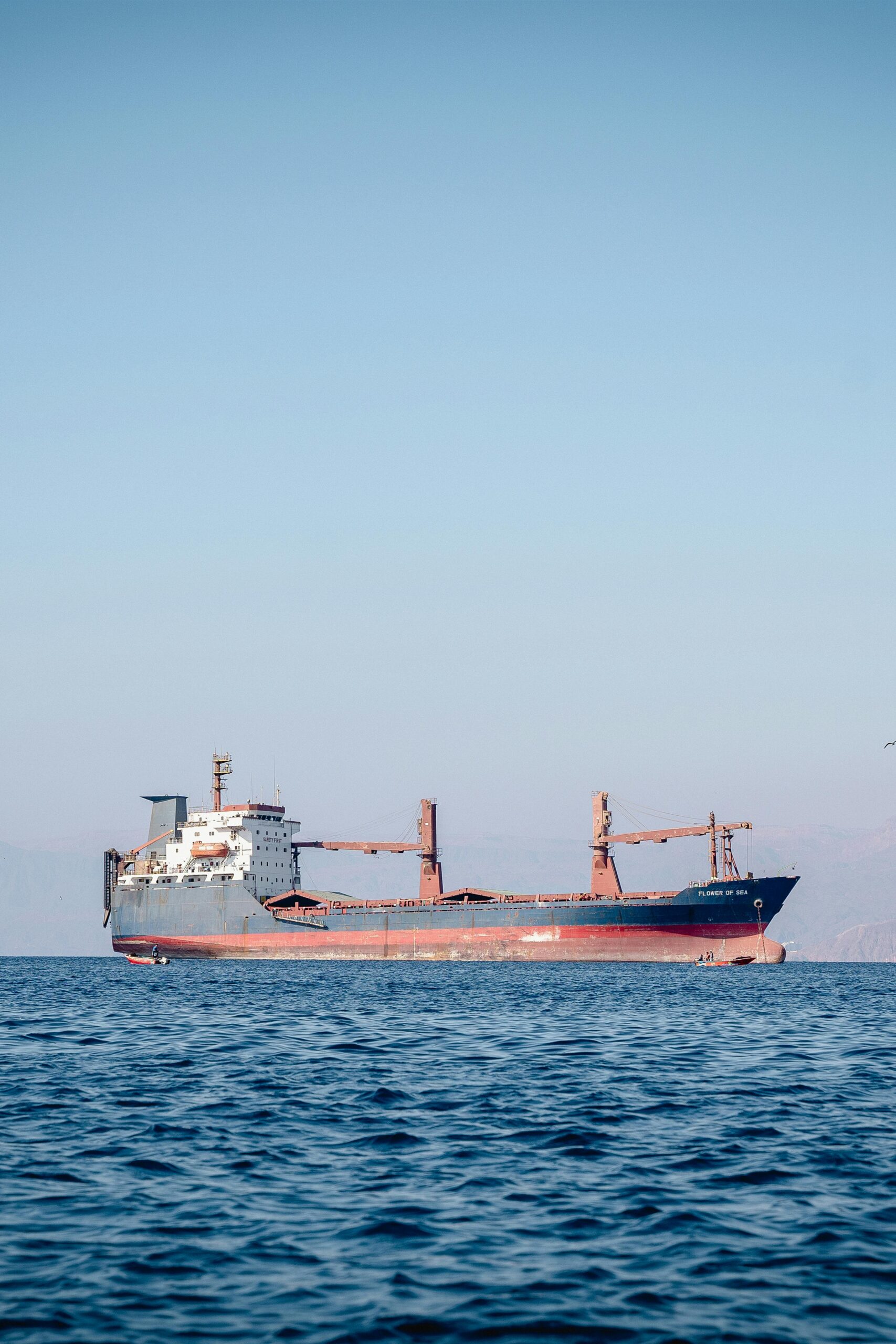

As global supply chains grapple with the effective closure of the Strait of Hormuz, a critical energy and trade artery, logistics operators are urgently seeking alternative routes. One corridor rapidly gaining prominence is the land and sea link between Egypt’s Safaga port and Saudi Arabia’s Duba port.
In an interview with Business Monthly, Egytrans NOSCO Co-CEO Abir Leheta outlined what the disruption means for Egypt, the readiness of the private sector, and the strategic steps needed to transform this short-term solution into a long-term economic advantage.
Global shock drives rerouting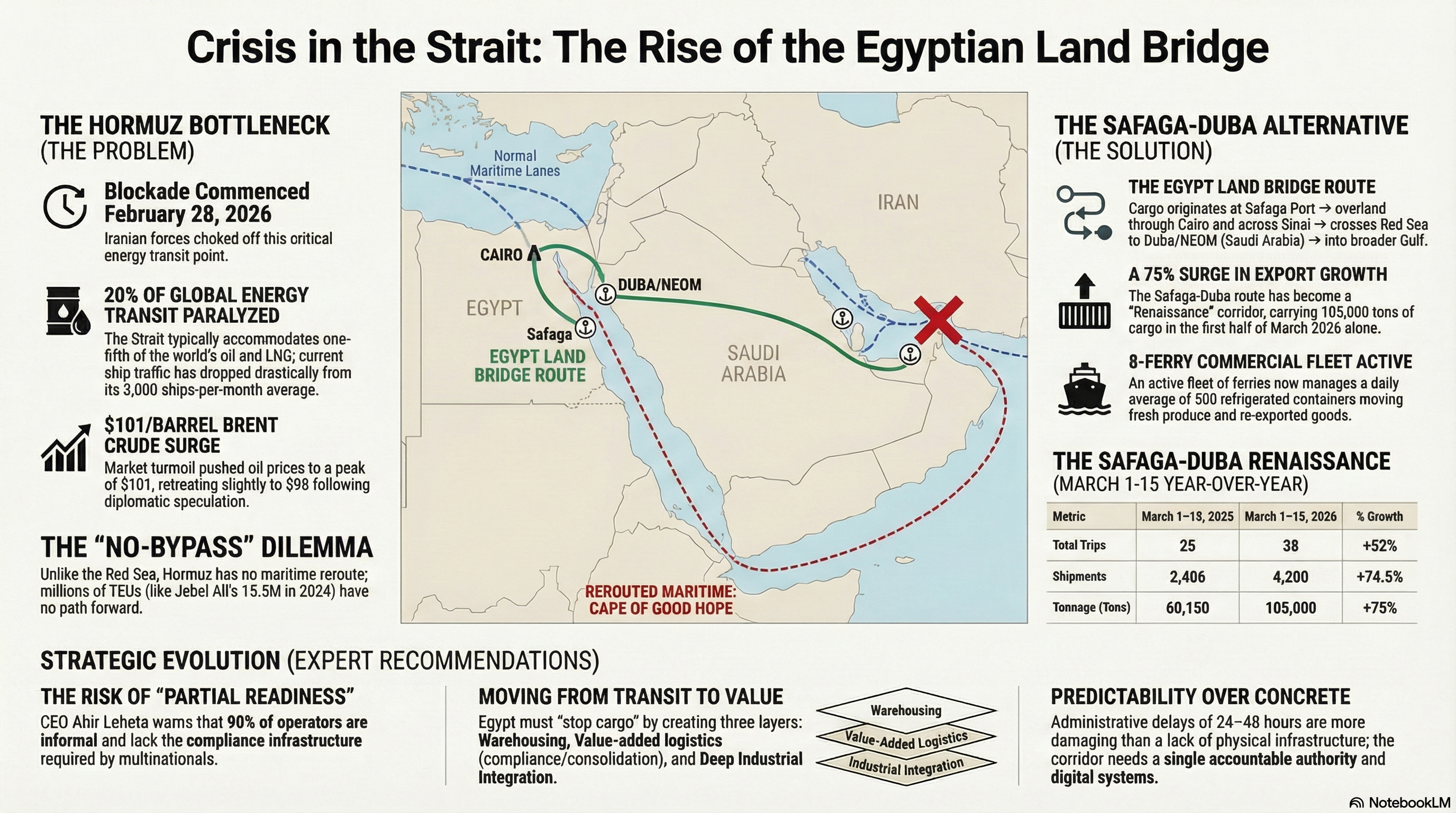
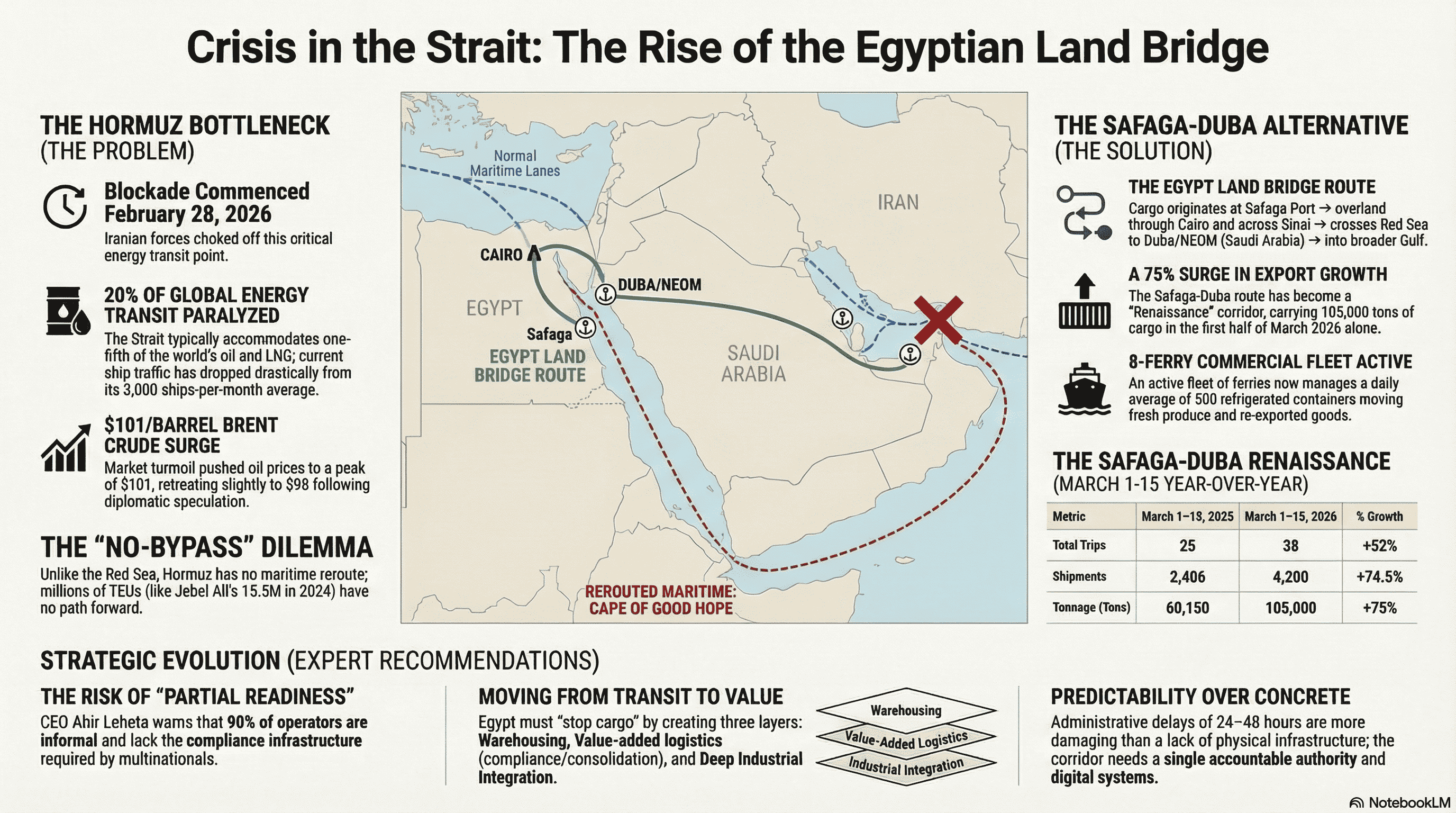
The shift toward the Safaga–Duba corridor follows a severe bottleneck in the Gulf. According to BBC, Iran has blockaded the Strait of Hormuz since February 28, disrupting a route that typically carries around 20% of the world’s oil and liquefied natural gas. Ship traffic has dropped sharply from its usual 3,000 vessels per month amid threats targeting commercial shipping.
The disruption has triggered volatility in global energy markets. Brent crude rose to $101 a barrel in the U.S. last week before easing to $98 following comments from President Donald Trump expressing optimism over a potential diplomatic resolution. However, uncertainty remains, with Iran signaling it is not currently engaged in negotiations.
Safaga–Duba sees surge in activity
As a result, the Safaga–Duba route has recorded a sharp increase in traffic. Data cited by Al Ahram shows that between March 1 and March 15, 2026, the corridor handled 38 trips carrying 4,200 shipments and 105,000 tons of cargo, compared to 25 trips, 2,406 shipments, and 60,150 tons during the same period last year—an increase of 75% in exports.
Daily volumes now average 500 refrigerated containers and 12.5 thousand tons, supported by eight operating ferries. Al Arabiya described the surge as a renaissance, noting a 52% increase in trips in early March. Much of the activity is driven by transit trade, including fresh Egyptian produce and re-exported goods destined for Gulf markets.
A structural advantage — with limits
Leheta highlighted the structural differences between disruptions in the Red Sea and Hormuz. “What tends to get overlooked is the difference between the two disruptions we are dealing with,” she said. “The Red Sea had a bypass. Ships rerouted around the Cape, added time and cost, and cargo kept moving. Hormuz does not work that way. When access is disrupted there, flows do not reroute. Jebel Ali handled 15.5 million TEU in 2024. That cargo has nowhere to go.”
Egypt’s geographic position—linking the Mediterranean, Red Sea, and overland Gulf access—has amplified the corridor’s importance. Freight volumes on the route have increased by 25% to 30% since the crisis began, according to Leheta, reflecting a direct commercial response to constrained Gulf access.
Private sector ‘partially ready’
Despite the surge, Leheta explained that Egypt’s logistics ecosystem is partially prepared to absorb sustained demand.
Building on her assessment, Leheta highlighted a set of priority areas that present strong opportunities to further strengthen the efficiency and scalability of the Safaga–Duba corridor. These include enhancing digital systems and truck handling capacity at Safaga port to better support growing freight volumes, improving backhaul optimization to reduce empty return trips and increase cost efficiency, and strengthening cross-border regulatory expertise among operators to enable smoother and more predictable cargo movement across markets. She also noted that advancing the formalization of the sector—where a significant share of operators currently operate informally—would unlock greater scale, reinforce compliance frameworks, and better position Egyptian logistics providers to meet the requirements of multinational clients and capture higher-value opportunities.
From transit to value creation
Looking ahead, Leheta stressed that long-term gains depend on capturing more value domestically. “My own assessment, held with appropriate uncertainty, is that the shift is partially structural and the structural component is larger than the market currently prices, but smaller than the most optimistic projections suggest,” she said.
She outlined a three-tier strategy: expanding warehousing capacity, developing value-added logistics services such as consolidation and phytosanitary processing, and integrating logistics with industrial zones to serve multinational manufacturers.
“Transit revenues are the least interesting part of this opportunity,” she added. “They are also the most fragile, because they are entirely contingent on the corridor remaining active under conditions that are not fully within Egypt’s control.”
Policy as an Enabler of Growth
Leheta underscored that strengthening regulatory consistency represents one of the most impactful levers for sustaining the corridor’s momentum, positioning predictability as a key competitive advantage. “The single most critical requirement at this stage is not infrastructure. It is predictability,” she noted, emphasizing that streamlined and reliable processes can significantly enhance Egypt’s attractiveness as a logistics hub.
In this context, she pointed to several high-impact areas for continued progress, including the development of clearer bilateral frameworks with Saudi Arabia, the expansion of digital systems at Safaga, enhanced financing mechanisms to support private sector growth, and deeper integration with industrial zones. She also highlighted the value of more centralized coordination, which could further align efforts across stakeholders and accelerate decision-making.
“Closing the gap between strong sectoral capabilities and unified system-wide coordination would unlock substantial value,” she concluded, noting that such alignment could elevate Egypt’s logistics ecosystem beyond the impact of standalone infrastructure investments.