

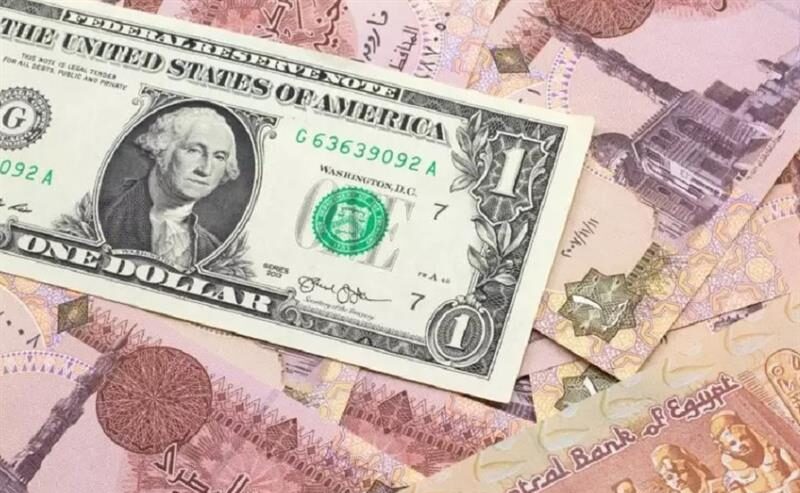

The Egyptian pound weakened past 50 against the U.S. dollar this week as escalating tensions in the Middle East disrupted energy markets and strengthened the greenback globally. The move brings the currency’s depreciation since mid-February to roughly 6%, underscoring the vulnerability of emerging markets to renewed dollar strength and rising oil prices.
Market-driven depreciation
The Central Bank of Egypt reported an average exchange rate of EGP 52.09 for buying and EGP 52.23 for selling on March 8. The 50-pound threshold was also breached at several domestic lenders, including Suez Canal Bank and Faisal Islamic Bank of Egypt, where the dollar traded above that level.
Banking analysts attribute the move to supply and demand dynamics within Egypt’s flexible exchange rate framework.
Tarek Metwally, an Egyptian banking expert, told Al Masry Al Youm that the limited depreciation reflects broader pressures across global currency markets, largely driven by regional geopolitical tensions and increased demand for foreign currency.
The decline follows a strong performance in 2025, when the pound gained 6.7% against the dollar, supported by record remittances and improved liquidity in the banking sector, according to Al Arabiya Business.
Energy markets drive dollar strength
The dollar’s recent gains have been driven in part by disruptions to shipping in the Strait of Hormuz. After a senior Iranian Revolutionary Guards official announced the closure of the strategic waterway earlier this week, Brent crude prices surged more than 8%, according to CTV News.
The U.S., which has operated as a net oil exporter for nearly a decade, is structurally better positioned to weather energy price shocks than crude-dependent economies such as those in the eurozone and Japan. This divergence has helped lift the U.S. Dollar Index, which reached an intraday high of 99.68 this week, according to Investing.com.
Analysts at Barclays estimate the dollar could strengthen by 0.5% to 1% for every 10% increase in oil prices. Investing.com noted that a sustained break above the 100 level could signal a significant shift in global currency markets.
Shifting monetary expectations
Higher energy prices are also reshaping expectations for U.S. monetary policy, with swap traders scaling back projections for Federal Reserve interest rate cuts this year.
Gareth Berry, a strategist at Macquarie Group, told IDN Financials that markets increasingly expect the Fed to adopt a more cautious approach to rate cuts if rising oil prices begin reinforcing inflationary pressures in the United States.
However, foreign exchange strategists remain divided over the durability of the dollar’s rally. A recent Reuters poll suggested the rebound may prove temporary due to lingering doubts about the long-term safe-haven appeal of U.S. assets.
Jane Foley, head of FX strategy at Rabobank, told Reuters that the ongoing debate over the dollar’s dominance reflects uncertainty about whether it still holds the unquestioned safe-haven status it historically enjoyed.
Strategists at JPMorgan also noted that the recent rally was partly driven by traders covering short positions linked to U.S.–Iran tensions rather than a structural shift in global markets. Even gold, traditionally viewed as a safe-haven asset, lost momentum as the stronger dollar made bullion more expensive for holders of other currencies, according to CTV News.
The path forward
For Egypt, navigating the current environment will depend largely on maintaining exchange rate flexibility. Allowing the pound to adjust to external shocks helps prevent the buildup of structural imbalances.
As global markets await further clarity on the Middle East conflict and its implications for U.S. monetary policy, emerging market currencies are likely to remain vulnerable to volatility tied to the trajectory of the U.S. dollar.