



Egypt’s non-banking financial sector is entering a new phase of regulatory reform as the Financial Regulatory Authority (FRA) seeks to accelerate digital transformation, deepen capital markets, and reduce administrative barriers for financial institutions.
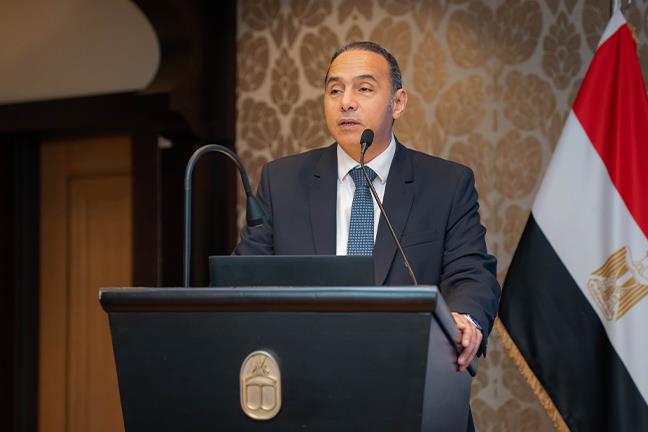
Speaking during an American Chamber of Commerce in Egypt (AmCham Egypt) breakfast briefing on June 30, FRA Executive Chairman Islam Azzam outlined the regulator’s priorities, ranging from artificial intelligence (AI) and fintech to insurance reform, capital markets, and financial education.
The event, organized by AmCham Egypt’s Non-Banking Financial Institutions Committee, brought together industry leaders and private-sector stakeholders to discuss the future of Egypt’s financial regulatory landscape.
Faster regulation for insurance
One of the FRA’s immediate priorities is shortening approval timelines for insurance products.
“I need to speed up its process. I don’t want a product to come to me and sit for three months,” Azzam said, referring to standard insurance contracts.
Rather than requiring approvals for thousands of recurring group insurance contracts, he said the regulator is considering a more streamlined approach, allowing insurers to submit periodic electronic records while maintaining regulatory oversight.
The objective, he said, is to improve market efficiency without compromising financial stability.
AI and fintech at the center of reform
Technology remains the regulator’s highest priority. “If you ask me what the priority is, I tell you AI and fintech,” Azzam said. “In the coming period, we need to develop the insurance sector, the entire non-banking financial sector using fintech.”
He highlighted the FRA Sandbox, which allows startups to test financial innovations such as electronic Know Your Customer (e-KYC) systems and digital signatures under an accelerated regulatory framework before entering the market.
The authority is also expanding fully digital licensing for non-banking financial institutions. Under the current framework, companies can obtain temporary licenses with a minimum capital requirement of EGP 75 million (≈$1.5 million), provided their operations are entirely digital.
According to Azzam, digital-first institutions represent a fundamental shift away from the traditional branch-based financial model.
Strengthening capital markets
The FRA is also introducing measures to deepen Egypt’s capital markets and encourage institutional investment.
Insurance companies and government insurance funds are now required to allocate at least 5% of their investment portfolios to open-ended mutual funds, a move aimed at increasing market liquidity and expanding the domestic investor base.
Azzam also pointed to securitization as an increasingly important financing tool.
“The securitized bond is very attractive to buy,” he said, noting that such instruments improve capital adequacy ratios while offering tax advantages that distinguish them from conventional government debt.
He added that the FRA is gradually implementing Basel III standards across the non-banking financial sector. While companies may exceed certain concentration limits, doing so requires higher capital adequacy levels to maintain financial resilience.
Expanding digital insurance
Insurance Law 155 has also introduced a new category of specialized insurance companies, allowing providers to combine life and non-life insurance products for specific market segments, particularly medical and micro-insurance.
Azzam believes technology will determine the success of micro-insurance.
“Micro-insurance must be purely digital,” he said, explaining that traditional broker-based distribution models are not economically viable for low-premium products.
To broaden access, the FRA has expanded distribution channels, allowing micro-insurance products to be sold through telecom operators, banks, and e-commerce platforms.
Investing in human capital
Alongside regulatory reform, the FRA is focusing on addressing skills shortages across the financial sector.
Azzam noted that Egypt currently has fewer than 10 practicing actuaries serving 39 insurance companies and nearly 700 insurance funds, highlighting a significant gap in specialized talent.
To help address the shortage, the FRA and the Insurance Federation are funding an actuarial diploma program at the American University in Cairo.
The authority is also working with the Ministry of Education to introduce financial literacy into schools. Under the initiative, students who successfully complete a stock market simulation will receive EGP 500 (≈$10) to begin investing on the Egyptian Exchange, providing practical exposure to capital markets from an early age.
As Egypt continues modernizing its financial system, the FRA’s agenda reflects a broader strategy centered on digital transformation, more agile regulation, stronger capital markets, and long-term investment in financial talent.