

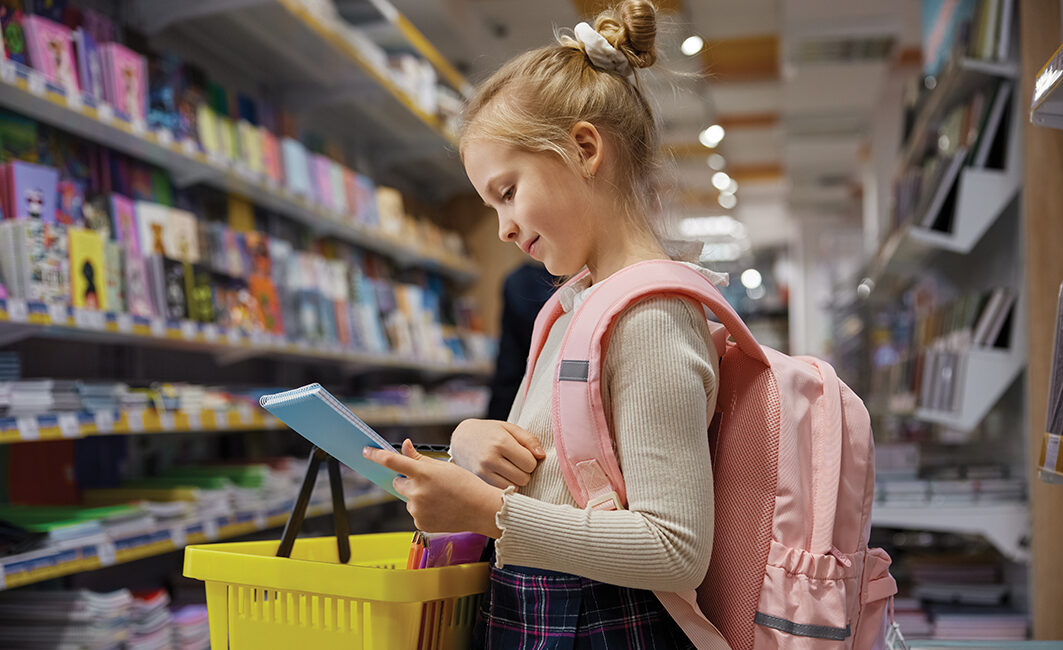


For school-supply sellers, Egypt is a sustainable, highly lucrative market. According to a 2026 UNICEF report, Egypt had the highest secondary school completion rate in the MENA region in 2024 at 96%. Second-place Morocco achieved 84%, followed by Iraq at 83%. Additionally, Minister of Education Mohamed Abdel Latiff reported that classroom attendance was 87% of enrolled students as of June.
Furthermore, Egypt’s education market is massive. CAPMAS said 32.9 million students were enrolled in the 2024/2025 academic year, equivalent to the ninth most populous country of MENA’s 20 nations.
In 2026, two major factors are reshaping the school supplies market. First, families face increasing pressure to pay for supplies. Egypt’s inflation rate has been above the Central Bank’s 5%-9% target since April 2022, including a 19-month stretch above 25%.
Second, consumer behavior is shifting. Young Gen Zers (enrolled in middle and high school) and the younger Gen Alpha have markedly different preferences from their predecessors.
Companies that understand these fast-changing forces and dynamics will win this highly lucrative shopping season.
Unique shopping season
Back-to-school shopping is unlike most other shopping seasons, as purchases are both essential and discretionary. According to Inmar Intelligence, an automation consultancy, “Back-to-School 2026 can be defined by three converging forces: intentional spending, increased switching and competing priorities.”
One standout characteristic is that “the first trip is planned, but replenishment drives reconsideration,” the Inmar Intelligence report noted. “The first … trip is highly structured and increasingly decisive. Parents plan ahead, build lists and enter the store with brand choices already in mind.” Subsequent visits focus on replacing depleted items.
“Back-to-School is a routine reset, not just a stock-up event,” said the report. “Parents are [preparing] for a full system of daily needs: meals, snacks and schedules.” These “purchases … are locking in decisions” for most of the coming academic year. In Egypt, that period lasts 41 to 42 weeks.
According to Inmar Intelligence, shopping decisions aim to overcome daily problems, including “struggling with breakfast, struggling with weeknight dinners, struggling with packed lunches.” Solutions can be compromised by “juggling competing priorities,” Inmar Intelligence noted. They must “prioritize nutrition … convenience [and] price.”
A third unique feature of back-to-school shopping is that it has become “increasingly mission-driven, with different retailers serving different needs. Retail choice is fluid … driven by budget, urgency and trip purpose.” Lastly, as switching increases, retailer fragmentation increases, too.
Shopping on a budget
In 2026, one of the biggest factors shaping this back-to-school shopping season is the “how much does it cost” question. One consequence is “back-to-school shopping … starts earlier than ever,” noted a JPMorgan report in September. “Consumers [want to] spread out their expenses over a longer timeframe.”
In addition, early starters likely find end-of-season discounts as retailers make way for the new season’s supplies, which will likely be noticeably more expensive.
JPMorgan’s report noted shopping for school supplies begins in “early July, way ahead of the traditional end-of-summer rush.”
Another cost-related trend is “quality and value are top of mind,” JPMorgan noted. “To win over discerning consumers, retailers are spotlighting the quality and value of their product offerings through strategic marketing and merchandising.”
“Rising school supply costs are driving the second-hand market,” Euronews reported in September. “The amount of money parents … will have to spend to provide their children with the necessary material for the return to school … is the highest in the last seven years.” Buying second-hand “not only saves up to 50% of school supply expenses, but also encourages more sustainable consumption.”
Another change in parents’ behavior is they “take stock and only buy what [they] need.” That includes “reusing school supplies that can still be used from previous years.” Another is “comparing prices and taking advantage of online offers, [where] the internet can be an ally.”
Third is group buying, “a little explored, but very effective option,” Euronews reported. “Parents from the same class or school can organize themselves to buy material in bulk and get better prices.”
Lastly, parents buy only essentials on initial trips, postponing discretionary items until the last quarter of the year. “This allows you to take advantage of autumn promotions or even the Black Friday sales,” noted Euronews.
Omnichannel shopping
In the age of rising e-commerce and online shopping, a growing cohort of young buyers prefers to buy from brick-and-mortar stores after researching products online, said Scott Chepow, global sales and negotiation leader at The Gap Partnership, a consultancy, in February.
He noted that as early as March 2021, 75% of apparel purchases were made online. In 2026, while digital channel sales increased in volume, “roughly 45% of apparel [was] sold online.” “Omnichannel [is] not going anywhere,” Chepow said. “Brands and retailers seek to deliver a more seamless, stronger relationship with the consumer [in the virtual world], while at the same time driving an improved customer experience” at physical stores.
VML, a marketing and advertising agency, noted in a 2025 report, “Shoppers don’t think in terms of online or offline; they expect both to work together. Online growth has leveled out. [That] marks the arrival of a more balanced, blended approach to retail,” adding, “Shoppers are rediscovering the value of physical stores while still expecting the speed, choice and convenience of digital.”
To maximize the benefits of virtual and physical stores, sellers “need to be conscious of consistency across platforms in product mix, promotional activity, pricing, speed of delivery and, most importantly, their own ability to deliver on the promises they make across channels,” said Chepow.
That makes outsourcing digital or physical channels a risky strategy. For one, it increases the possibility “one or both of the parties pursue a self-interest agenda, and things can get competitive and confrontational in the negotiation process,” he explained.
New-gen shopping
Gen Z and Alpha schoolchildren are a major force in shaping how much parents spend on school supplies and which products they buy, according to a Boston Consulting Group (BCG) report in October. “They follow different rules than prior generations did. Heritage no longer determines brand value, and brand loyalty is less important than cultural relevance, authenticity and creator energy. Their discovery-to-purchase journeys are predominantly trend- and product-driven, rather than brand-driven.”
Over the past decade, brand loyalty has been replaced by experimentation; brand heritage has been superseded by cultural relevance; campaigns have been dethroned by social-first storytelling; linear journeys have become fragmented; and instead of “buying less and better, purchases are trend-driven,” BCG stressed. “Traditional marketing approaches fall short with these consumers.”
One way back-to-school sellers can attract Gen Z and Alpha buyers is via “micro-influencers, [not] celebrities,” noted 20something, an HR consultancy that aligns employers with their Gen Z hires. “This generation, growing up in a hyperconnected, hyper-cynical world, has shifted its loyalty. Not to fame, but to familiarity. Not to authority, but to authenticity.”
The reason for the radical departure from predecessors is “Gen Z [and] Alpha came of age watching institutions fail,” noted 20Something. “Economic crises, climate denial, political spin … Their world has been saturated with marketing, and they’ve learned to decode it like a second language.”
As a result, they trust the micro-influencer filming from a bedroom more than the celebrity on a global billboard. “That shift is not a trend; it’s a cultural rewiring,” 20Something explained. “They don’t hate influence. They hate illusion.”
It’s not just influencers that shape those young people’s decisions. The Chartered Institute of Logistics and Transport (CILT) noted, “Recommendations from friends and family ranked highest across all age groups, followed by product reviews and colleagues.”
Another major influencer shaping Gen Z and Alpha purchasing decisions is artificial intelligence (AI). CILTUK said the technology is used to “discover products online,” stressing, “generative AI tools are becoming a common part of the online shopping journey, particularly for shoppers looking for quick guidance or help comparing options.”
CILT estimated “roughly one in three said they had gone on to purchase an item recommended by an AI tool. Electronics emerged as the category most influenced by AI-generated suggestions, with 43% of respondents saying AI had helped them discover products in this area. Clothing, books and media, and home goods were also frequently mentioned.”
New marketers
To attract buyers, especially during the lucrative back-to-school shopping season, “Chief marketing officers [need to] shift from a marketing-led to a research-led journey that requires answering new questions,” BCG noted.
Some of these “questions” include, “Which touchpoints actually move the needle for your category and your consumers (not in aggregate, but for your target audience in the moments that decide brand choice)?”
The consultancy also highlighted, “Where is your brand earning credibility in the eyes of both human researchers and the AI systems they now rely on? And once you are found, what is the brand consistently delivering that drives positive reviews and justifies being chosen again?”
Ultimately, “as research-led journeys become the norm and new digital gatekeepers emerge, brands must compete not only for consumer attention, but also for credibility and differentiation across an expanding network of decision touchpoints,” BCG stressed. “Those that succeed will be the ones that show up consistently, with the right message, where consumers (and, ultimately, agents) search, compare and decide.”