

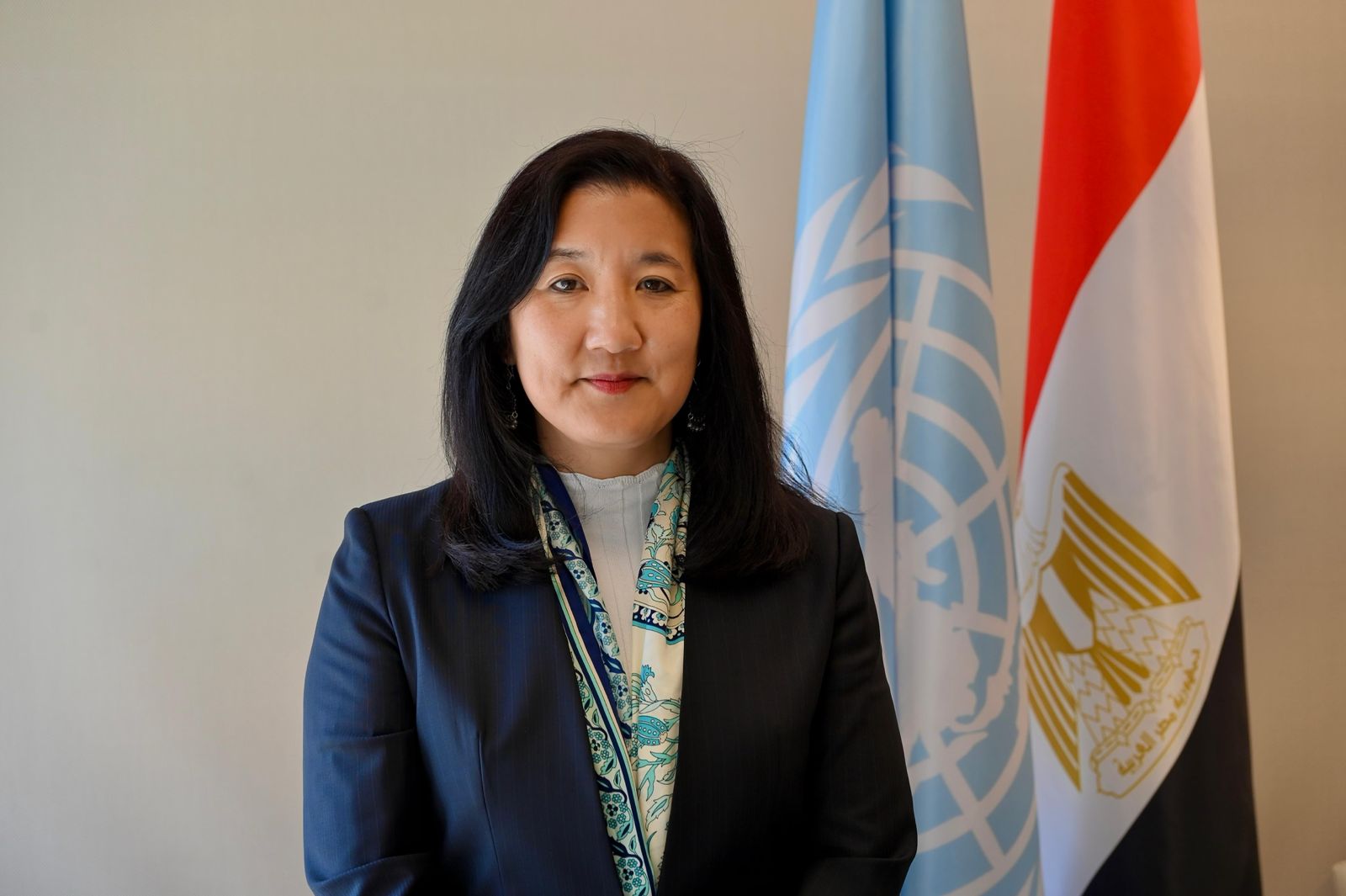


As Egypt advances its national development agenda amid economic, environmental, and technological shifts, the United Nations Development Programme (UNDP) continues to play a central role in supporting inclusive and sustainable growth across the country. With more than five decades of partnership in Egypt, UNDP works closely with government institutions, the private sector, and local communities to translate national strategies into tangible development outcomes.
As she begins her tenure as UNDP Resident Representative in Egypt, Chitose Noguchi steps into a country navigating an important phase of transformation. In this interview with Business Monthly, she outlines UNDP’s role in supporting Egypt Vision 2030 and the National Narrative for Comprehensive Development, and reflects on advancing inclusive growth, green transition, and human development.
This Q&A has been edited for length and clarity.
Business Monthly (BM): As you begin your role as UNDP Resident Representative in Egypt, what is your vision for UNDP’s work in the country?
Chitose Noguchi (CN): Since arriving in Egypt a few months ago, I have been impressed by the scale and complexity of the country, as well as the strong capacity of Egyptians to overcome challenges and create opportunities. I am fortunate to serve in a country with a clear national vision under Egypt Vision 2030 and the National Narrative for Comprehensive Development, and one that values multilateralism and the role of the UN. UNDP is seen as a trusted partner at both national and local levels, and our role is to support Egyptians on the journey toward a more inclusive and greener development path.
BM: What are the main challenges UNDP faces in Egypt today?
CN: Egypt is operating in a complex global environment marked by economic uncertainty, climate pressures, and regional dynamics. These challenges make partnerships and innovative financing more important than ever. At the same time, the speed at which solutions are needed requires agile and coordinated delivery. The positive sign is the strong momentum in renewable energy, sustainable finance, and digital transformation.
BM: How does Egypt compare with other emerging markets?
CN: Egypt’s key strengths include its large market, strategic location, strong workforce, and institutional capacity to deliver at scale. There is a growing focus on translating strategies into implementation, particularly in renewable energy, digital transformation, and innovation. With a young population and strong green and digital potential, Egypt is well-positioned for competitive and inclusive growth.
BM: UNDP works with many stakeholders. How do you plan to strengthen collaboration with national and local partners?
CN: No single entity has all the expertise or resources required to achieve sustainable development. Progress depends on partnerships that bring together government institutions, the private sector, civil society, academia, and the development community. For example, when designing financing mechanisms for green transition, we convene ministries, businesses, banks, and research institutions. For SDG localization, communities—especially women and youth—must be part of planning alongside local authorities. Open dialogue builds trust and leads to more effective and lasting results.
BM: How has UNDP’s cooperation model evolved?
CN: While we continue delivering projects, we increasingly focus on policy advice, dialogue platforms, financing mechanisms, and partnership coordination. In today’s constrained financing environment, this includes blended finance and risk-sharing approaches with the private sector. This model takes more coordination, but it leads to stronger ownership and more sustainable impact. For example, a local development project in four governorates used donor funding to unlock additional public and private investment.
BM: Inclusive growth and human development are central to UNDP’s mission. How will you continue empowering youth, women, and communities?
CN: Egypt has achieved strong economic growth, but growth must be inclusive to be sustainable. Women, youth, and persons with disabilities should be active contributors to the economy. This means connecting them to opportunities through digital skills, green jobs, entrepreneurship, and access to finance. Supporting micro, small, and medium enterprises is key. Through partnerships, including with MSMEDA, we help MSMEs grow, create jobs, and strengthen local economies. Human development is holistic—it includes social and environmental dimensions. Whether through nature-based solutions or circular economy initiatives, empowerment happens when people are treated as agents of change.
BM: What role does UNDP play in Egypt’s green growth and environmental agenda?
CN: Egypt’s environmental agenda is exciting because it links sustainability with economic opportunity. UNDP helps translate climate and biodiversity commitments into practical solutions that improve livelihoods and create green jobs. One example is our work with private sector partners on energy-efficient LED lighting, with several AmCham member companies leading this transition. We also see strong potential in renewable energy, sustainable tourism, and protected areas. In the Red Sea, for instance, conservation efforts go hand in hand with sustaining tourism and generating income for local communities.
BM: What message would you like to share with Egyptians about UNDP’s partnership?
CN: UNDP supports evidence-based policymaking, facilitates implementation, and brings stakeholders together to design innovative solutions and financing mechanisms. For more than five decades, we have worked alongside national institutions and communities, and that commitment continues. Egypt is navigating economic, environmental, and technological change, and UNDP brings global experience adapted to local realities. What gives me confidence is the strength of our partnerships and the shared commitment to improving people’s lives.
BM: What changes would make UNDP’s work even more effective?
CN: Maintaining momentum is essential. Distributing economic gains more broadly will strengthen human development. Advancing renewable energy, digital transformation, and responsible use of technologies such as AI will support long-term progress. Policies that encourage cross-sector collaboration, private sector engagement, and streamlined processes will enable faster and more effective delivery.