



Egypt’s private investment rose 32% in the latest fiscal year, following a 77% increase the previous year, as the government pushes ahead with fiscal reforms aimed at strengthening private-sector growth and improving the business environment.
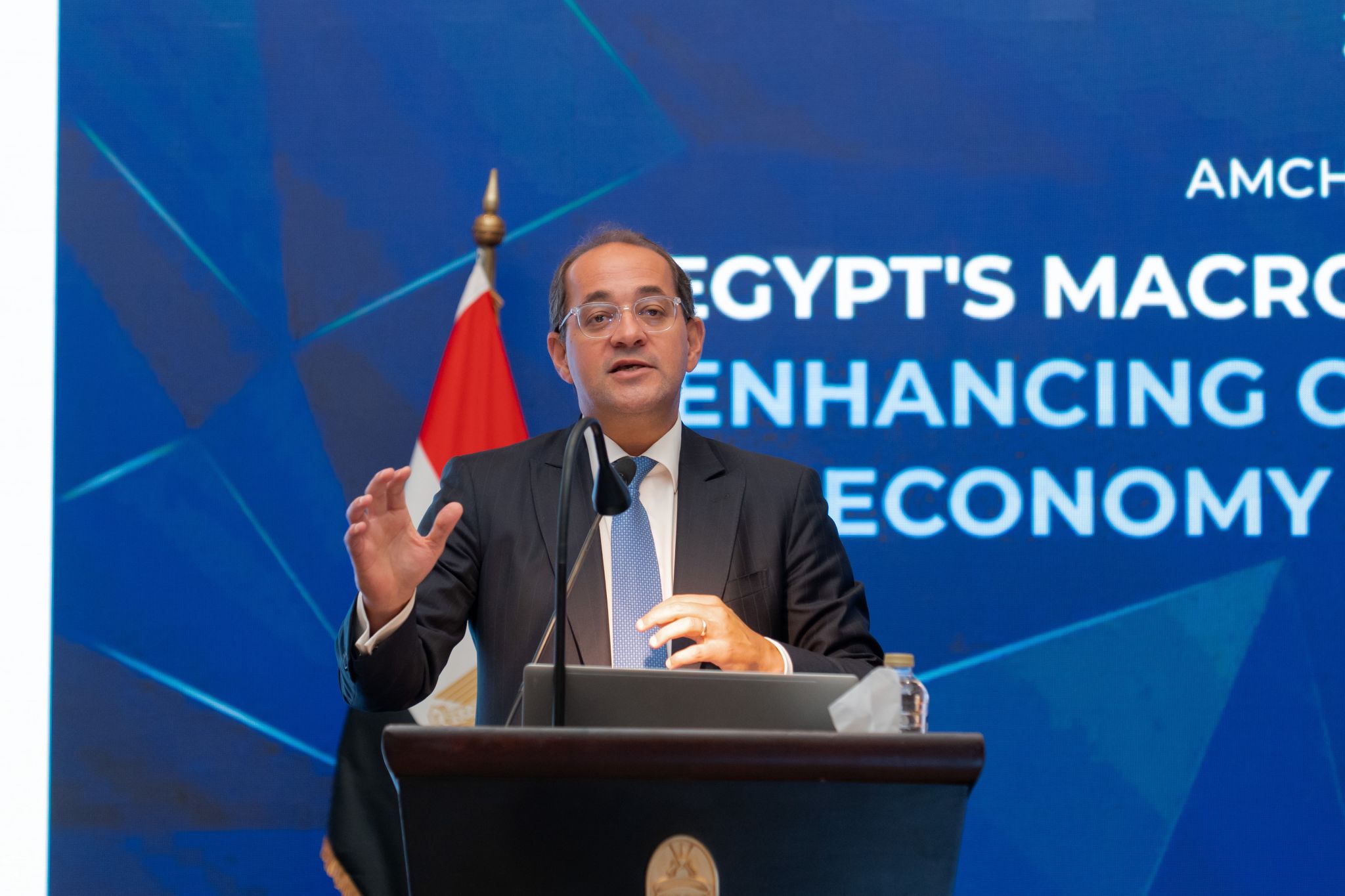
Speaking at the American Chamber of Commerce in Egypt’s luncheon, “Egypt’s Macro-fiscal Reform Agenda: Enhancing Competitiveness of the Economy and Private Sector,” on September 21, Finance Minister Ahmed Kouchouk outlined the government’s latest fiscal indicators and priorities for the next phase of reform.
Private investment now accounts for 63% of total investment, making it the leading component for a second consecutive year. The government aims to raise that share to 70% in the coming years, Kouchouk said.
He pointed to ICT, manufacturing, and tourism as the main sectors driving the acceleration in economic activity. ICT remained among the strongest performers, while manufacturing continued to benefit from its scale and export potential. Tourism also recorded strong growth, while activity was slower in construction, agriculture, and wholesale and retail.
Kouchouk said stronger private investment, rising private-sector credit, and continued foreign direct investment would be critical to building a more productive and competitive economy.
Fiscal consolidation continues
Egypt recorded a primary surplus of 4.9% of GDP in the latest fiscal year, while the overall budget deficit stood at 5.8% of GDP, below the government’s 7% target. Kouchouk expects the deficit to fall below 5% in the current fiscal year.
Preliminary figures also put government debt below 82% of GDP, with the government targeting around 70% next year. External financing requirements have fallen by $6 billion over the past three years, exceeding the government’s earlier target of reducing them by $1–2 billion.
Kouchouk identified borrowing costs as one of the biggest constraints on public finances. A reduction of 2–3 percentage points in borrowing costs could create an estimated EGP 450–500 billion in additional fiscal space for spending on citizens, businesses, and public services.
Lower inflation will be key to achieving that, he said, as bringing inflation into single digits would create room for lower interest rates and ease the pressure of debt servicing.
Market indicators have also improved. Kouchouk said Egypt’s credit default swaps had recently reached their lowest level in more than 15 years, while government bond yields and stock-market indicators had also improved.
Tax reform shifts toward compliance
Tax administration remains another pillar of the reform program. Kouchouk said the tax-to-GDP ratio had increased by one percentage point, with most of the improvement coming from simplification, facilitation, and stronger voluntary compliance rather than new taxes.
A tax-facilitation package introduced in July amended eight laws and included around 20 measures, including changes related to stock-market capital gains and administrative procedures.
Digitalization is also expanding the tax base. Nearly 1.5 million property units have been voluntarily registered through the property-tax mobile application, according to Kouchouk.
A legal change limiting penalties beyond taxpayers’ original dues has also reduced liabilities for businesses and individuals. The Tax Authority approached nearly 350,000 taxpayers, resulting in a combined EGP 30 billion reduction in liabilities, Kouchouk said.
Meanwhile, 210,000 businesses have joined the simplified tax regime for companies with annual turnover of up to EGP 20 million, bringing more businesses into the formal tax and digital systems.
Customs next
The government is now preparing a third tax-facilitation package, which Kouchouk said would have a larger fiscal scope.
Customs will be a central focus of the next phase, with reforms targeting shorter clearance times, greater predictability, and lower costs for businesses across ports, airports, and other customs services. Digitalization will play a key role in the process.
The government is also working through a large backlog of tax disputes. Kouchouk said it had received almost 400,000 requests to resolve disputes, with around half already closed.
The measures point to a fiscal reform agenda increasingly focused on shifting the burden from new taxation toward compliance, improving the efficiency of government systems, and creating more room for private-sector investment.
For businesses, the next phase will depend on how effectively these reforms translate into lower administrative and financing costs, faster customs procedures, and a more predictable operating environment.