


Egypt’s investment story is increasingly being shaped by more than headline-grabbing megaprojects. As governments compete for global capital amid economic uncertainty, the country’s strategy has focused on pairing large-scale investments with regulatory reform, digital transformation, and private-sector participation.
That approach helped Egypt attract $15.45 billion in foreign direct investment (FDI) in 2025, accounting for 22.1% of all FDI entering Africa and making it the continent’s largest recipient, according to the United Nations Conference on Trade and Development’s (UNCTAD) World Investment Report 2026. The performance came amid an uneven global investment environment. While global FDI rose 6% to $1.62 trillion, Africa’s inflows fell from $94 billion in 2024 to $70 billion in 2025, with the previous year’s figure heavily influenced by exceptional real estate transactions.
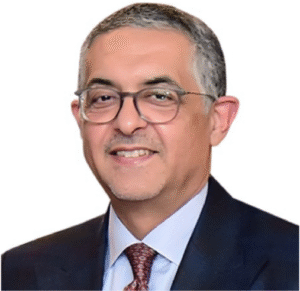
In this conversation with Business Monthly, Hossam Heiba, Managing Partner at Orbis Capital and former President of the General Authority for Investment and Free Zones (GAFI), discusses the reforms behind Egypt’s performance, the sectors attracting investors, and what it will take to sustain the country’s momentum.

Structural gravity beyond megaprojects
“The $15 billion FDI milestone, with some estimates reaching $15.45 billion, accounting for more than one-fifth of all foreign investment entering Africa, is the result of a deliberate, multi-layered strategy that combined mega-project execution with deep institutional reform,” Heiba said.
He noted that the Ras El-Hekma tourism and urban development megaproject “served as a powerful anchor for investor confidence.” Yet, he stressed that Egypt’s performance extended beyond a single transaction.
“While this exceptional transaction boosted 2024 figures, what is particularly telling is that excluding Ras El-Hekma, foreign investment into Egypt still increased by approximately 25% in 2025,” Heiba explained. “The $3.5 billion Alam El-Roum project further demonstrated that Egypt’s real estate and infrastructure sectors offer sustained, bankable opportunities.”
For investors, Heiba said, the performance reflects both resilience and momentum. “The reassuring signal is about resilience,” Heiba said. “Global FDI rose 6% to $1.6 trillion in 2025, but the recovery remained narrow, fragile, and uneven. Africa’s total FDI fell to $70 billion from $94 billion in 2024. Yet Egypt held its ground, not just maintaining but strengthening its position as the continent’s largest FDI recipient.”
At the same time, he emphasized that growth has become increasingly diversified. “The aspirational signal is about momentum. Excluding the exceptional Ras El-Hekma transaction, foreign investment into Egypt still increased by approximately 25% in 2025. This tells global markets that Egypt’s appeal is not dependent on a single megaproject, it is structural. Investors are coming for manufacturing, renewable energy, logistics, construction, and infrastructure. They are coming because the regulatory environment has improved, the infrastructure is world-class, and the opportunities are diverse.”
Democratizing efficiency
According to Heiba, sustaining investor confidence required transforming the investment environment itself.
“The modern approach we championed was never about isolated fixes, it was about systemic transformation,” he said. “And the evidence of its success is reflected not just in the FDI figures, but in the qualitative shift in how global investors perceive Egypt.”
Central to this effort was the Golden License. “By consolidating all required approvals and permits into a single license issued within 20 working days, we eliminated the fragmentation and delays that historically frustrated investors.”
The reforms extended beyond a single licensing mechanism. “The new Companies Law mandates that all government approvals be completed electronically within 20 working days, the same timeframe applied to Golden License holders. This effectively democratized fast-track licensing.”
Digitalization became another pillar of reform. “The unified digital platform now provides all investor services, licenses, approvals, and application tracking, electronically, reducing human intervention and enhancing transparency.”
Heiba added that investment incentives were expanded, allowing investors to recover up to 50% of investment costs through tax deductions over seven years, while the State Ownership Policy Document broadened opportunities for private-sector participation across sectors accounting for roughly 85% of GDP.
“These reforms signaled to global investors that Egypt was not merely seeking capital, but building an integrated ecosystem where doing business is predictable, efficient, and transparent.”
He also emphasized that institutional modernization was reinforced by macroeconomic reforms.
“Beyond procedural reforms, a critical pillar of our modern approach was ensuring predictability and clarity in monetary and fiscal policies,” Heiba said. “During this period, Egypt witnessed significant adjustments, including exchange rate unification and interest rate rationalization, which, while challenging, provided a clear anchor for investor expectations and reinforced macroeconomic stability.”
Alongside these reforms, GAFI established mechanisms to resolve investor concerns quickly while maintaining continuous dialogue with the private sector.
“We institutionalized continuous dialogue with the business community through regular, structured meetings with targeted sectors across the economy,” Heiba said. “This ensured that policies remained responsive to on-the-ground realities and that the investment environment evolved in partnership with the private sector.”
From strategy To scale
Heiba argues that Egypt’s competitive advantage lies not in any single factor, but in the combination of geography, infrastructure, energy, market size, and governance.
“Egypt’s competitive advantages today are not singular, they are synergistic. They form an ecosystem that no other African economy can replicate.”
He cited Egypt’s strategic location, the Suez Canal, the Suez Canal Economic Zone (SCZone), and more than $550 billion invested in infrastructure over the past decade, including roads, railways, ports, and new cities.
“This is not merely about connectivity; it is about readiness.”
Energy has become another pillar of competitiveness. “With renewable energy capacity accelerating, over 10 GW of PPAs signed and nearly 6 GW reaching financial close, Egypt is becoming a regional clean energy powerhouse.”
He also pointed to Egypt’s population of more than 100 million, competitive labor costs, and institutional reforms as complementary strengths that together create an attractive investment ecosystem.
Looking ahead, Heiba believes Egypt’s next growth phase will be driven by renewable energy, green hydrogen, manufacturing, digital transformation, pharmaceuticals, and smart logistics.
“Egypt’s leadership in African FDI is not an endpoint, it is a foundation. The next wave of growth will be driven by sectors where Egypt’s competitive advantages are most pronounced and where global demand is accelerating.”
On green hydrogen, he stressed that the country’s existing renewable energy base provides the necessary platform.
“What Egypt must do now is move from strategy to scale, accelerating project pipelines, finalizing regulatory frameworks for hydrogen exports, and leveraging our proximity to European markets, which are desperate for green hydrogen imports.”
Manufacturing, he said, requires an equally focused strategy. “Target specific value chains, automotive, pharmaceuticals, electronics, and agribusiness, where our infrastructure gives us a competitive edge. Deepen integration with global supply chains, positioning Egypt as a nearshoring hub for European and Gulf companies seeking to diversify away from Asia.”
He also highlighted Egypt’s gas infrastructure as a strategic advantage. “In addition to the two liquification terminals Egypt possesses and the well-spread-out natural gas network, it gives it a unique opportunity to be a natural gas hub in the region either through its own production or re-exporting from other sources within the region.”
“The infrastructure is ready. The energy is ready. The market is ready,” Heiba said. “Now we must be strategic in how we deploy these assets to secure partnerships that will define Egypt’s industrial future for decades.”
Sustaining confidence
Looking ahead, Heiba believes maintaining investor confidence will depend on continuous institutional evolution rather than one-time reforms.
“Continuous digitalization, post-investment care, and regulatory agility” remain the three priorities for sustaining Egypt’s momentum, he said, pointing to deeper integration of government services, stronger investor support mechanisms, and continued legislative modernization.
“The message to global markets is clear: Egypt is not a one-story economy. It is a market that has built the foundations for sustained, diversified growth,” Heiba concluded. “The $15 billion figure is not a peak to be celebrated, it is a platform to be built upon. Confidence is earned through consistency. Egypt has built that foundation; now we must build upon it.”