

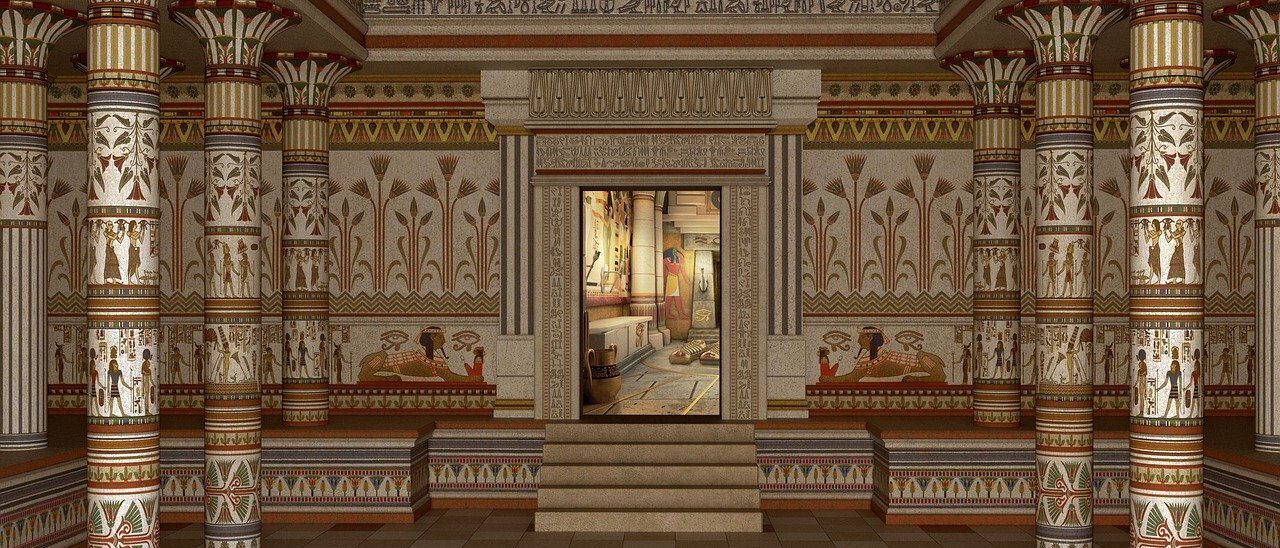


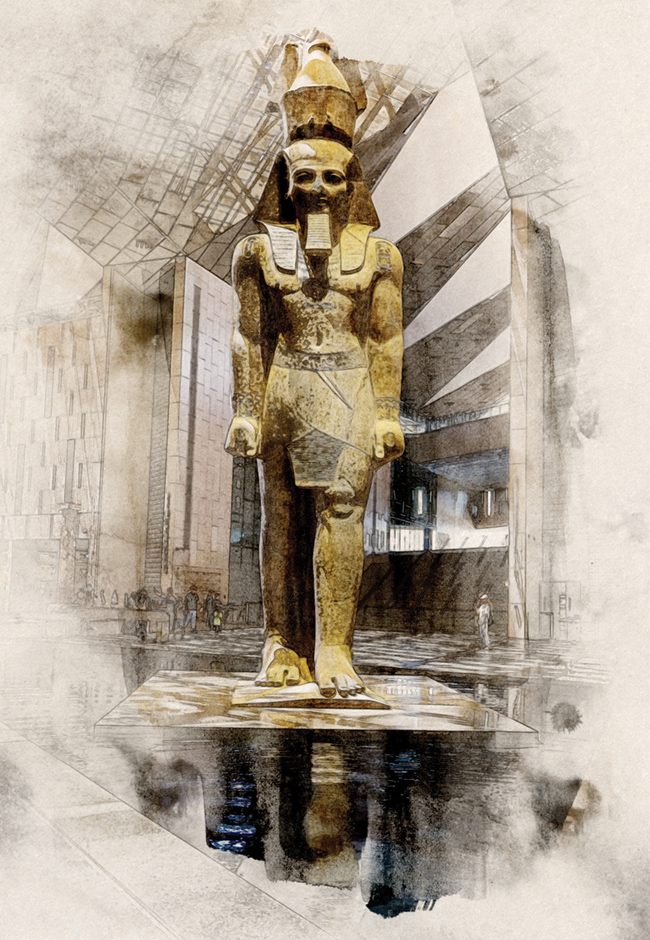
Egypt has officially opened the Grand Egyptian Museum (GEM), a cultural highlight of the modern era located near one of the Seven Wonders of the Ancient World. With 81 museums already in place in Egypt, the Grand Egyptian Museum (GEM) is set to be the largest archaeological museum in the world. According to an article by Forbes in November, the GEM has 12 exhibition galleries packed with more than 100,000 artifacts spanning more than 5,000 years from pre-dynastic times to the Greco-Roman era.
“Some of the items on display have never before been seen by the public, while others, including about 4,500 funerary objects, were previously scattered around the country, including in the Egyptian Museum in downtown Cairo,” said the article. The entire collection of King Tutankhamun’s treasures, including his iconic golden mask, is displayed together for the first time.
Costing an estimated $1.2 billion, the GEM is projected to attract 8 million visitors annually, providing a significant boost to Egypt’s tourism sector, which has been challenged by regional instability, according to the BBC. Egyptian guide and Egyptologist Ahmed Seddik told the BBC, “We hope the Grand Egyptian Museum will usher in a new golden age of Egyptology and cultural tourism.”
Finance Minister Ahmed Kouchouk said the GEM represents a public-private partnership model, underscoring Egypt’s focus on projects that deliver sustainable economic returns. “The opening of the Grand Egyptian Museum will give strong momentum to Egypt’s diversification efforts and reinforce its global tourism competitiveness,” he noted.

Museum economy
Cultural tourism is emerging as a powerful driver of economic growth. According to UNESCO, the UN World Tourism Organization defines cultural tourism as centered on cultural attractions and products. It is one of the fastest-growing segments of the industry, accounting for 40% of tourism worldwide.
Through cultural tourism, countries are capitalizing on their heritage and contemporary cultures to boost economic growth and sustainable development. This, in turn, “can lead to job creation, regeneration of rural and urban areas, and the protection of natural and cultural heritage,” UNESCO said.
Sherif Fahmy, CEO of the N Gage Group consultancy, told Ahram Weekly in October, “Countries with strong cultural resources and investment in heritage-based attractions experience higher international arrivals and longer visitor stays.”
Museums and cultural heritage sites are powerful resources for local development. According to 2024 research by the University of Florence, museums “can inspire and help regenerate local economies, attract visitors and bring in revenue.”
Notably, they also help bring in foreign currency. According to research by the International Council for Museums in 2025, “Museums can generate independent revenue by relying on sources such as entrance fees, shops, and space rentals.”
It added that museums are increasingly turning to self-generated revenues and hybrid funding models that combine public and private sources. This shift is driven by the need to offset the instability of public funding and ensure financial sustainability, the research noted.
“Tourism fosters the growth of small and medium-sized enterprises (SMEs), such as local guesthouses, souvenir shops, and tour guide services,” according to research by Horizon University College in the U.A.E. in April. It explained that the expansion of entrepreneurial activity helps to distribute income more equitably.
In Egypt, the GEM development roadmap extends to support ancillary services. “The GEM’s ripple effect will fuel demand for high-end retail, fine dining, and modern transportation logistics,” tour guide Eman Abdel Naby, who has a master’s degree in museum studies from Helwan University, told Arab Finance in November.
Transforming cultural tourism
In Egypt, tourism has long been a cornerstone of the economy. According to data released by the State Information Service (SIS) in October, tourism contributed 3.7% of Egypt’s GDP in fiscal year 2024/2025, compared to 2.4% in 2021/2022. The sector remains one of the country’s top 10 economic activities, driven by political stability, infrastructure upgrades, and international promotion campaigns.
Tourism revenues hit $14.4 billion in FY 2023/2024, marking a 34.6% increase from the previous year. In the first nine months of FY 2024/2025, Egypt recorded $12.5 billion in tourism revenue, up 14.7% year-on-year, SIS added.
According to Julia Simpson, the World Travel and Tourism Council (WTTC) president and CEO, Egypt’s Travel & Tourism sector is experiencing a powerful resurgence, with record-breaking economic contribution and a sustained surge in visitor spending. These numbers reflect a sector on the rise: dynamic, resilient, and vital to the country’s growth.”
“With its rich cultural heritage, world-class attractions, and growing connectivity,” Simpson added, “Egypt continues to captivate travelers from around the globe. The government’s focus on investment, infrastructure, and sustainable tourism is clearly paying off.”
Tarek Shoukry, head of the Real Estate Development Chamber at the Federation of Egyptian Industries, called the GEM opening “a pivotal milestone on the global tourism map that will reinforce Egypt’s standing as a leading cultural and tourist destination,” according to the Daily News in November.
Notably, the GEM’s strategic location makes it easily accessible to international tourists. Elhamy ElZayat, owner of Emeco Travel and former head of the Egyptian Tourism Federation, told Al-Ahram Weekly in October that the GEM is not only a new attraction on the Giza Plateau. “Sphinx International Airport, located a half-hour drive from the GEM, provides easy accessibility to the area and enables tourists to visit both the Giza and Saqqara Pyramids along with the GEM.”
Fahmy of N Gage Group said, “The GEM’s proximity to the Giza plateau creates a cluster effect.” He explained that tourists can experience more than one attraction in a single area, supported by improved transport and hospitality infrastructure. “This integration will likely encourage longer stays in Cairo, helping the capital reclaim its position as a central tourism hub,” he said.
The GEM is also opening up new avenues for investment and entrepreneurship. According to Shoukry, the museum is set to “stimulate new hotel, real estate, and tourism investments across West Cairo, creating substantial added value for surrounding land and developments.” This, he added, will help transform the area into a new magnet for residents, entrepreneurs, and both local and international investors.

Meeting global standards
The GEM project has attracted international support for development. The project’s main financiers included Japan International Cooperation Agency (JICA) and the Japan Bank for International Cooperation (JBIC), through two Official Development Assistance (ODA) soft loans totaling $800 million. The loans come with an Interest rate of 1.4% and a repayment period of 25 years.
In addition, in 2003, an Irish architecture firm won a UNESCO-supervised global competition to design the Grand Egyptian Museum, envisioning it as a modern extension of the pyramids — a symbolic “fourth pyramid” in both form and meaning.
Meanwhile, the GEM should foster a significant push toward sustainable and digital tourism. “The GEM itself has set the standard by becoming the first museum in Africa and the Middle East to receive an EDGE Advanced green building certification,” tour guide Naby said. “This focus on sustainability is a strategic move to attract a new class of “environmental, social, and governance (ESG)-conscious travelers and investors.”
According to the International Finance Corporation, “the EDGE Advanced certification recognizes the GEM’s resource-efficient and climate-smart design and construction, which is helping the museum save more than 60% in energy costs and reduce water use by 34% compared to a conventional building of its type and size.”
Engaging youth
Generation Z, now entering adulthood with disposable income, is redefining social engagement, seeking more than static displays in museums. “Gen Z values experience over passive observation. Instead of static museum visits, they prefer hands-on learning opportunities.
These include workshops and interactive exhibits that allow them to participate, co-creation activities where they can contribute to digital archives or site narratives, and live storytelling and performances that make history immersive,” according to a March publication by the World Heritage Foundation in the Netherlands.
Notably, engaging youth in the new museum is paramount. The museum introduced the GEM Discovery Challenge, an add-on experience designed to enhance the immersive exploration of ancient Egypt.
This self-guided, clue-based game invites visitors to use their smartphones to solve riddles and uncover hidden details throughout the museum’s exhibition spaces. The goal is to transform a traditional visit into an interactive journey, giving guests a deeper understanding of Egypt’s treasures.
The GEM also has a Children’s Museum designed to ignite curiosity about ancient Egyptian culture in a safe, welcoming, and imaginative space. It allows children to “choose the way they learn best, fostering cognitive, social, emotional, and physical development,” according to the GEM’s official website.
Targeting children aged 6–12 and families, the museum offers interactive experiences that encourage self-directed learning and multi-generational dialogue. Visitors explore history through curriculum-based activities guided by GEM experts. Programs include workshops, performances, and technology-driven activities that blend play with education. Children can even co-create experiences through innovative, child-led initiatives.
To boost visibility of the GEM’s opening among digital-native audiences, the museum partnered with TikTok MENA to live-stream the event to viewers worldwide. The collaboration also included a bespoke GEM-themed filter, virtual gifts modeled after ancient Egyptian artifacts, and a CapCut template –a video editing app developed by the creators of TikTok– that encourages users to create modern, engaging content showcasing Egypt’s story.
According to a statement, TikTok created a unique digital experience on its platform called “Night at the Museum,” inviting global content creators to participate in an event granting them an exclusive opportunity to explore the museum after hours. These invited creators will share their experiences live on TikTok.
“This initiative highlights TikTok’s pioneering role in merging cultural heritage with creative content, strengthening Egypt’s digital image globally,” the statement noted.
Maintaining success
Achieving lasting success will require the GEM to do more than open its doors. Economic expert Abu Bakr El-Deeb told Travel and Tour World, a specialized digital B2B platform, in November that without substantial and sustained support, the museum risks becoming merely a celebrated landmark rather than “a genuine engine of economic growth.”
“The museum’s impact will largely depend on Egypt’s ability to ensure necessary infrastructure, including hotels, transportation, and safety measures, is in place to accommodate the influx of visitors,” he said.
The government should also monitor the impact of overtourism and growing pressure on cultural institutions. According to an article on Museum Next, an online platform for museum professionals, “Excessive foot traffic in museums can diminish visitor experience, damage fragile artifacts and overwhelm staff.”
Notably, the GEM has introduced a new reservation system to manage visitor numbers following the unprecedented turnout during its opening week, according to SIS. To regulate visitor flow and ensure a high-quality experience, ticket bookings and purchases for public holidays and weekends will be available exclusively through the museum’s official website.
Ahmed Ghoneim, CEO of the Grand Egyptian Museum Authority, said, “The visitor flow has been remarkably smooth under the new system,” said Ghoneim, adding that the regulation measures have helped balance public enthusiasm with the need to maintain comfortable capacity levels and improve the overall experience.