



Over the past months, the Egyptian stock exchange (EGX) has generated significant profits for local and foreign traders. Between July 2025 and February, the principal index, the EGX30, rose nearly 49% to 49,138 points.
As of March, traders began using a new tool, financial derivative contracts, for the first time.
These instruments require the seller to deliver or swap an asset (such as stocks) with the contract holder on a specified date at a predetermined price. If the asset’s market price rises above the contract price, the contract’s value increases in the secondary market, and vice versa.
Then EGX Chairman Islam Azzam described the introduction of derivatives as “historic.” Since their launch, the EGX30 reached 54,662 points, an all-time high. At press time, the index had declined to 53,932 points. However, it has been on an upward trajectory throughout July.
“Derivatives … can be a useful tool [to] lock in prices, hedge against unfavorable movements in rates, mitigate risks,” said Investopedia, an investment platform. However, they are “hard to value, complex to understand, sensitive to supply and demand factors.” Research from Cambridge University noted the causes of the global financial crisis of 2008 “were several, but there is little doubt that derivatives were one of the factors.”
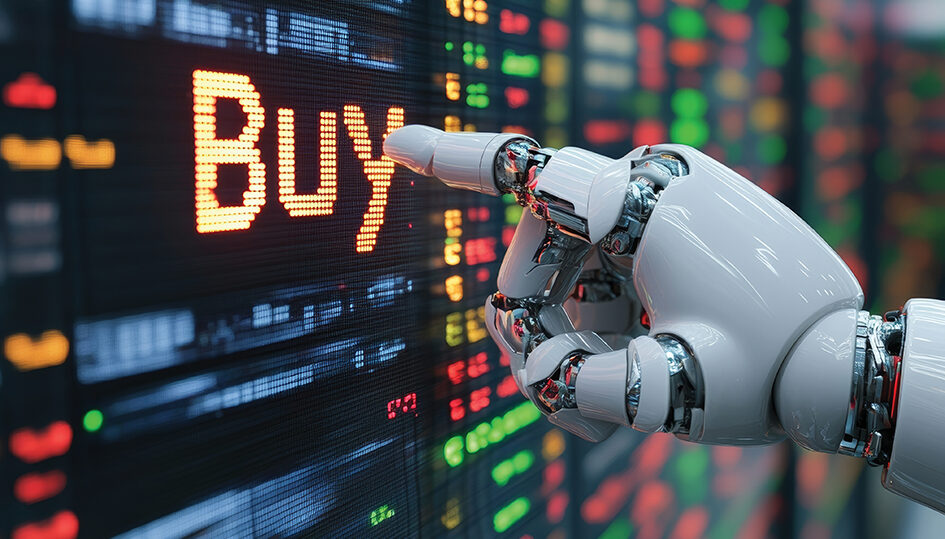
Meanwhile, “artificial intelligence (AI) has emerged as a transformative force in [stock market] investment management,” said Investopedia. To avoid the technology’s pitfalls, effective regulation, which Egypt is still drafting, is essential.
Small steps
The EGX has been careful in introducing derivatives to the market, offering only futures contracts from the four types globally available. In essence, futures contracts set the price of a stock or a basket of stocks, such as the EGX30, for delivery at a specified future date. These maturities range from 1 month to 12 years, depending on the underlying asset and local regulations.
On the Egyptian exchange, futures contracts offer two maturity options: three or six months. The EGX press release said the shorter maturity brings tighter pricing and easier entry and exit. The six-month contract introduces a short-term hedging element.
“The contract size has been deliberately simplified [with] each index point [higher or lower than what the futures contract states] equals EGP 1,” local legal firm Al Tamimi & Co. noted. This “lowers entry thresholds for market participants, enhances contract granularity, supports liquidity formation in the early phase, allows precise hedge calibration by institutional investors, [and] reduces systemic … risk.”
Azzam said the next step is to extend derivatives to the EGX 70 index and later individual stocks. However, these steps will “depend on the readiness of the market,” he told the media in March.
The goal is to “provide institutional and sophisticated investors with a regulated mechanism for portfolio hedging, tactical asset allocation, arbitrage strategies and enhanced price discovery,” Al Tamimi & Co.’s paper noted. That would “deepen liquidity, enhance pricing efficiency and improve Egypt’s regional competitiveness as a capital markets hub.”
Beware the risks
According to RiskInk, a consultancy, risks arise because financial derivatives’ secondary market value is determined by supply and demand, traders’ sentiment regarding the underlying asset (stock or index), the asset’s sector (real estate, manufacturing, etc) prospects, and macroeconomic and geopolitical outlooks.
Although futures contracts are typically used to hedge against the price fluctuations of their underlying assets, market prices of the contracts themselves experience significant volatility when traded on secondary markets. RiskInk noted derivatives’ “sensitivity to movements in prices, foreign exchange, commodities, interest rates and inflation, [which] diminishes real return in the value of the cash flow.”
One of these secondary-market risks is associated with the total face value of the underlying contracts (its notional value) when the asset’s market price deviates noticeably from the contract’s price at maturity.
Second is “market-to-market risk,” which arises when both sides calculate unrealized gains or losses of their transaction. The third type of risk is “expected exposure,” which depends on how much one side has bought or sold a particular type of futures contract. Lastly, the “stressed future potential exposure, which is the maximum exposure if future contracts turn negative for one trading party.
These risks converge to form the “value-at-risk” metric. If that figure is too high across multiple asset classes, it could start a market-wide crash followed by a real-economy slump, an IMF paper noted. The 2008 global financial crisis, which started with subprime mortgage defaults, was accelerated by a crash in derivative contracts, which had long subscribed to the notion that housing prices would increase forever.
A third potential problem with derivatives trading is “human error, system failures, or inadequate procedures and controls,” noted RiskInk. These are “the responsibility of senior management [who] set the parameters and design and implement back-office procedures … to counteract operational risk.” Too many operational failures result in “reputational risk” for the trading institution.
Too many (or frequent) operational and reputational risks could “theoretically” lead to “systemic risk,” noted the IMF paper. “It is based on the ‘domino theory … the idea that the failure of one institution will cause failures in a series of other institutions or create a market-wide disruption in the financial system.” If realized, “this would be the catastrophic event that nobody looks forward to or anticipates, but is always a possibility,” said the IMF.
Using absolute unilateral regulation with “no international coordination” to mitigate financial derivatives risks would likely backfire. “Legislative and regulatory risk [has] the potential for overreacting to the risks of derivatives,” said the IMF. However, “if any one country imposes rigorous new regulatory or legislative requirements without proper international coordination, the market can successfully move to another jurisdiction, with destabilizing effects.
The IMF also warned, “Without international coordination, new regulatory or legislative requirements will accomplish nothing other than to dampen the utility of products that provide very important benefits, not just to end users who can manage their portfolios, but also to the dealers, for whom derivatives represent a strong source of profitability.”
AI’s role
According to a 2024 IMF paper, “Generative artificial intelligence [GenAI, which generates bespoke replies to queries] and related breakthroughs have the potential to dramatically increase the efficiency of capital markets [in] trading, investing and asset allocation.
“Analyses of pricing patterns and trading dynamics already show changes in some markets consistent with the adoption of these new technologies. Most current use of AI appears to be an extension of existing trends in the use of machine learning and other advanced analytical tools.”
Nevertheless, the IMF stressed, “more significant changes are a medium- to long-term concern.” One is potential “large changes in market structure through the greater and more powerful use of algorithmic trading and novel trading and investment strategies.” That would mean “increasing turnover and asset correlations and driving prices to reflect new information at an ever-increasing speed.”
The IMF noted an upside: “AI may actually reduce financial stability risks by enabling superior risk management, deepening market liquidity and improving market monitoring by both participants and regulators.”
However, too much AI-enabled trading also creates “new risks,” such as “Increased market speed and volatility under stress, especially if trading strategies of AI models all respond to a shock in a similar manner or shut down in response to an unforeseen event,” the IMF noted.
Another AI-trading risk is “more opacity and monitoring challenges, as AI spurs further migration of market-making and investment activities to hedge funds, proprietary trading firms, and other nonbank financial intermediaries and creates uncertainty about how AI models used by different investors and traders might interact.”
The IMF cited “increased operational risks as a result of reliance on a few key third-party AI service providers that dominate computational power and large language model services,” the IMF noted. Last are “increased cyber and market manipulation risks, particularly in generating fraud and social media disinformation.”
Regulation to the rescue?
According to the IMF, most risks arising from AI-enabled stock or financial derivatives trading can be “addressed by existing regulatory frameworks.” However, their effectiveness diminishes over time as traders increasingly rely on more sophisticated AI systems.
“To ensure relevant authorities are prepared for these potentially transformative changes, they should consider additional policy responses,” the IMF paper noted. First, implement “circuit breakers [when frantic AI-influenced trades are detected] and review … practices in light of potentially rapid AI-driven price moves.”
That would require “enhanced monitoring and data collection of the activity of large traders, including nonbank financial intermediaries,” the IMF said. Accordingly, regulators must “request a risk mapping from regulated entities.” This “data and internal and external interconnections and interdependencies” would enable the regulator to identify how much AI is influencing traders’ decisions, thereby determining the institution’s AI risk exposure levels.
The IMF paper recommended, “adopting a coordinated approach to [licensing] AI third-party service providers [tech companies] and continued striving for resilience in capital markets by enhancing cyberattack protocols.” It also stressed the importance of “adopting measures to ensure the continued market integrity and efficiency, and resilience of over-the-counter markets as AI use proliferates.”
Egypt doesn’t have AI regulation specific to stock trading. According to Regulations.AI, a specialized news aggregator, “The regulatory environment is currently anchored by the Egyptian Charter for Responsible AI, which provides the ethical blueprint for developers and users. This framework is primarily composed of ‘soft-law’ instruments.”
That needs to change, and fast. In July 2025, the U.S. Congress highlighted several risks associated with using third-party AI tools for trading stocks and derivatives. Atop the list were “cybersecurity and other protections [that] assure that generative AI does not lead to market manipulation and, more broadly, how to ensure market stability and transparency amid faster trade execution,” according to the congressional paper.
Ultimately, introducing AI regulation in stock and derivatives trading may require revisiting several fundamental regulatory concepts. “Current laws prohibiting market manipulation tend to require a showing of ‘intent’ to manipulate markets such as derivatives, rendering them problematic to apply to algorithms, which lack human-like ‘intent,’” a congressional paper in March noted. “Such gaps could make it especially difficult to constrain such AI-related risks.”