



Egypt’s healthcare spending has risen more than 12-fold since FY 2014/15, as universal health insurance expansion, pharmaceutical localization, and digital health create opportunities for private investment.
Egypt allocated EGP 511 billion ($9.5 billion) to healthcare in FY 2026/27, up from EGP 42.4 billion in FY 2014/15, as the government expands health insurance coverage, upgrades medical infrastructure, and seeks greater private-sector participation.
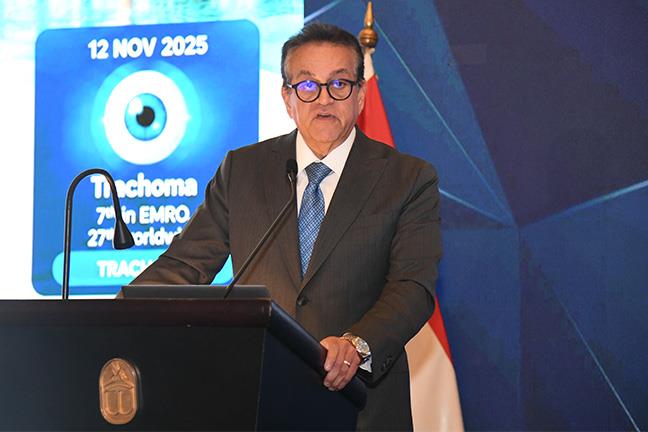
Speaking at an American Chamber of Commerce in Egypt (AmCham Egypt) luncheon on October 18, 2026, Health and Population Minister Khaled Abdelghaffar said the budget would need to double to accelerate progress toward universal health coverage and meet growing demand. At the exchange rate used in the minister’s presentation, that would bring annual spending to approximately EGP 1.02 trillion ($19.1 billion).
His presentation highlighted investment opportunities across healthcare delivery, pharmaceutical manufacturing, preventive care, and digital health, alongside reforms intended to expand access and improve service delivery.
Universal health insurance expands coverage
Egypt’s National Health Strategy for 2024–2030 outlines seven priorities and 44 objectives, measured against 692 indicators. Developed with input from nearly 50 local and international organizations, the strategy aims to strengthen accountability and guide investment.
“The strategy without an indicator is a wish list,” Abdelghaffar said.
The Universal Health Insurance System (UHIS) is central to the reform agenda. Its first phase, completed in Aswan in July 2025, covers six governorates and more than 5.4 million people. The system has delivered more than 116 million medical services through 334 facilities, including private-sector providers, according to the minister.
“We are still learning, we’re still improving, but it is acceptable,” he said.
The second phase is expected to extend coverage to another six governorates. A pilot was launched in Minya in June 2026, with Minya, Kafr El-Sheikh, Damietta, North Sinai, Matrouh, and Alexandria targeted for rollout over the following two to three years.
Abdelghaffar estimated that the second phase would cover 18.6 million people, bringing the total across the first two phases to approximately 24 million.
Reducing the financial burden on households remains another priority. Out-of-pocket healthcare expenditure declined from 62.6% in 2018 to 57.2%, but remains well above the government’s target of 28% by 2030. Expanding insurance coverage could therefore create a larger, more structured market for healthcare providers while reducing patients’ direct costs.
Private-sector partnerships create opportunities
The expansion of universal health insurance is opening opportunities for private healthcare providers, investors, and suppliers. Abdelghaffar said the government increasingly views healthcare businesses as partners in service delivery and infrastructure development, supported by a concession-based legal framework introduced in 2024.
Planned measures include streamlining licensing, digitizing administrative procedures, and making existing public healthcare facilities available to private operators.
In Minya, approximately 350 primary healthcare units were available, while the Egyptian Health Authority required around 160, according to the minister. He identified at least 150 units as potential opportunities for private-sector participation. In Alexandria, another 70 primary healthcare units could be available for investment.
Across the universal health coverage system, around 581 healthcare providers had been contracted in 2026, Abdelghaffar said. The government is also seeking private investment to develop new facilities and upgrade existing assets.
For investors, these initiatives could offer opportunities to operate healthcare facilities, provide specialized services, and support the expansion of insurance-backed medical care. Their commercial viability will depend on contract terms, reimbursement arrangements, demand, and the pace of implementation.
Pharmaceutical localization supports growth
Egypt’s pharmaceutical market reached approximately EGP 422 billion ($8.5 billion) in 2025, according to figures presented by the minister. The market handled more than four billion packs, while its value grew 37% year on year and sales volume increased 9%, based on figures attributed to IQVIA.
Abdelghaffar said Egypt could expand its pharmaceutical exports by building on domestic demand, local manufacturing capacity, and international partnerships.
“Egypt can become a much larger exporter,” he said.
He also highlighted the World Health Organization’s recognition of the Egyptian Drug Authority’s maturity level in medicines and vaccines as an important development for the country’s regulatory standing and export ambitions.
Local manufacturing is another government priority. More than 250 pharmaceutical preparations, raw materials, packaging and supplies, and related items have been localized, Abdelghaffar said. The government is also working with manufacturers to secure active pharmaceutical ingredients and strengthen medicine supply chains.
For pharmaceutical companies, these efforts could create opportunities in domestic production, contract manufacturing, supply-chain development, and exports. The extent of that potential will depend on manufacturing capacity, access to inputs, regulatory requirements, and the competitiveness of locally produced medicines in international markets.
Prevention and digital health shape investment priorities
The government is also prioritizing preventive care and early diagnosis to improve health outcomes and reduce the need for costly treatment at advanced stages of disease.
“Prevention at every stage is the most cost effective investment in health,” Abdelghaffar said.
He cited Egypt’s breast cancer screening initiative, which has screened more than 22 million women aged 18 and above. According to the minister, the proportion of detected cases diagnosed at stage four fell from approximately 70% to around 20–22%. He also cited a 71% decline in hepatitis C mortality.
Artificial intelligence, genomics, remote monitoring, and precision medicine are expected to support earlier diagnosis and more personalized treatment. Digital services could also extend access beyond traditional hospital settings, creating potential demand for medical technology, data infrastructure, and remote-care solutions.
However, Abdelghaffar stressed that emerging treatments require appropriate medical supervision and regulation. He warned against the unsupervised use of unapproved peptides promoted for longevity and other benefits.
“Everything has to be under supervision,” he said.
Egypt’s healthcare reform agenda combines expanded insurance coverage with infrastructure development, pharmaceutical localization, and investment in technology. Delivering on these priorities will require sustained financing, effective implementation, and closer collaboration between the government and private sector.
For businesses, the opportunity extends beyond a growing healthcare budget to a broader shift in how services are financed, delivered, and supplied. The scale of investment that follows will depend on whether policy reforms translate into commercially viable projects and more predictable conditions for private operators.